


Which Truck Tows a Boat More Confidently around Bradenton: 2026 Toyota Tundra or 2026 Chevrolet Silverado 1500?
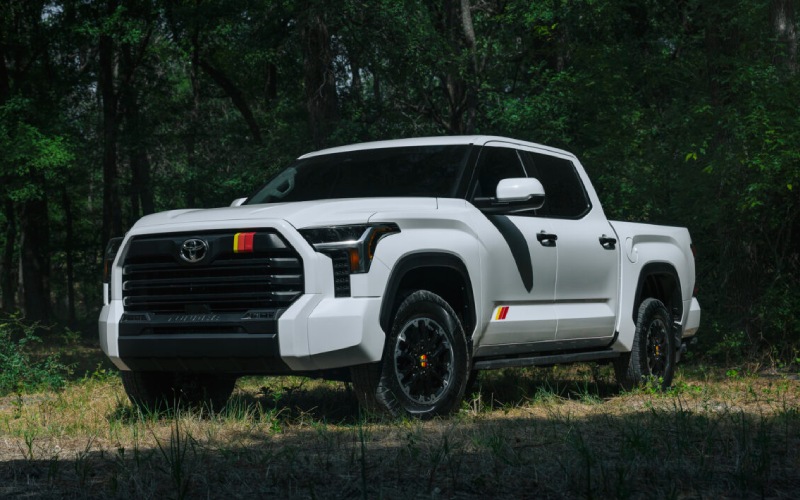
Venice Toyota – Which Truck Tows a Boat More Confidently around Bradenton: 2026 Toyota Tundra or 2026 Chevrolet Silverado 1500?
When drivers ask which truck feels more confident towing a boat on the Gulf Coast—Tundra or Silverado 1500—we start with what you feel from the driver’s seat. Confidence is a product of torque delivery, suspension control, visibility, and smart trailering tech that works with you instead of asking for extra steps. Both trucks are capable, but they go about the job differently. Tundra leans into modern turbocharged muscle, an optional hybrid system that brings big torque on tap, and tools like Trailer Backup Guide with Straight Path Assist that make low-speed maneuvers less of a juggling act. Silverado 1500 hits back with a broad engine lineup, robust tow ratings, and a deep library of camera views with an In-Vehicle Trailering App designed to simplify setup and checks.
Start with torque. Tundra’s i-FORCE MAX turbocharged hybrid delivers a surge of low-end power that helps when you’re pulling a boat up a wet ramp or easing onto a windy causeway. That torque comes in earlier and more predictably than a traditional naturally aspirated V8, so you often use less throttle to get moving. Silverado 1500’s Duramax 3.0L Turbo-Diesel also shines at low rpm, and the 6.2L EcoTec3 V8 puts down healthy horsepower for highway passing. But when it comes to smooth, repeatable launches with a heavy trailer, an electrified torque assist like Tundra’s hybrid system can feel like a secret advantage—especially on imperfect surfaces where gentle power delivery keeps the tires hooked up.
Next, look at chassis dynamics. Tundra’s multi-link rear suspension with coil springs is tuned for ride comfort and towing stability. You notice it on the approach to ramps, over expansion joints, and even crossing grated bridges on your way to a morning launch. It helps the truck feel settled instead of skipping over bumps. Silverado 1500’s setup is durable and stable at speed, and trims like ZR2 add Multimatic DSSV dampers that excel in rugged terrain. But for the constant mix of city streets, causeways, and marina access roads, Tundra’s coil-spring composure brings a refined edge that helps you arrive relaxed and ready.
Visibility and guidance are where modern trucks can make towing feel easy. Tundra’s available Panoramic View Monitor provides a 360-degree perspective, so it’s simple to check clearances around docks or align to a bow stop. Trailer Backup Guide with Straight Path Assist can help keep your trailer tracking straight while you steer in reverse—an intuitive aid when you’re squeezed between pilings or angling toward a crowded ramp. Silverado 1500 answers with up to 14 available camera views and an In-Vehicle Trailering App that walks through checklists and trailer profiles. Both approaches reduce stress, and both are worth having. The difference is how Tundra’s guidance actively assists while reversing, which is often the trickiest moment during launch or recovery.
Once you’re on the move, infotainment and controls shape the experience. Tundra’s available 14-in. Toyota Audio Multimedia touchscreen and available 12.3-in. digital gauge cluster put key camera feeds, towing data, and navigation front and center. Silverado 1500 features a clean layout with an available 13.4-in. display and a 12.3-in. Driver Information Center, along with available Google built-in for familiar voice commands and mapping. If you regularly tow in unfamiliar areas, voice-first navigation is a time-saver; when ramp approaches demand precise positioning, quick camera access matters even more. Tundra’s interface makes those transitions feel natural, so you can stay focused on what’s happening outside the truck.
Safety and driver assistance play supporting roles. Tundra includes Toyota Safety Sense 2.5 on every trim, so Dynamic Radar Cruise Control and Lane Tracing Assist are part of the base equation. Silverado 1500 offers Chevy Safety Assist and layers on advanced options, including available Super Cruise hands-free driving with trailering capability on High Country. Super Cruise is a remarkable technology for compatible highways; if your towing routine includes long stretches on mapped corridors, it’s a compelling feature. For mixed driving that bounces between local streets, ramps, and city traffic, having a standard suite across Tundra’s lineup ensures you aren’t forced up the trim ladder to get the core tools you’ll use most often.
If your question is purely “Which truck tows the most?” Silverado 1500 can be configured for higher maximum towing than the Tundra. Yet most boat owners operate comfortably below the ceiling and care more about predictable behavior in the moments that matter—line up, back down, launch, and load. In those scenarios, the Tundra’s hybrid torque, coil-spring ride, and active trailer guidance can feel more confidence-inspiring day after day.
- Towing readiness: Tundra’s available i-FORCE MAX hybrid torque and Trailer Backup Guide with Straight Path Assist make boat ramps less stressful.
- Ride and control: A multi-link rear suspension with coil springs helps the truck stay composed over patched pavement and during loaded braking.
- Visibility tools: The available Panoramic View Monitor offers a commanding 360-degree perspective when docks and curbs close in.
For buyers weighing both trucks, a smart test-drive includes a hook-up. Bring your boat or schedule time to connect to a comparable trailer so you can feel the low-speed control differences first-hand. Ask to try camera toggles, practice a couple of back-downs, and simulate a launch and recovery workflow. The right choice becomes obvious when your grip relaxes on the wheel mid-maneuver.
Venice Toyota is serving Bradenton, Nokomis, and North Port with knowledgeable truck specialists who can walk through towing features in real time and demonstrate how each system helps during launch-day tasks. If you want a pickup that blends strong ratings with built-in tools that simplify tight-quarters towing, Tundra stands out as the easier truck to live with for Gulf Coast boating routines.
Frequently Asked Questions:
Does the Tundra’s hybrid help with towing at low speeds?
Yes. The i-FORCE MAX hybrid’s electric motor assists the twin-turbo V6, delivering high torque right off the line. That helps with smooth launches on slick ramps and makes fine throttle adjustments easier when you’re inching the trailer into position.
Can Silverado 1500’s cameras match Tundra’s reversing assist?
Silverado 1500 offers up to 14 available camera views and an In-Vehicle Trailering App that streamlines setup and visibility. Tundra’s advantage is Trailer Backup Guide with Straight Path Assist, which actively helps keep the trailer straight during reversing, useful in tight approaches.
What if I drive long highway stretches to new marinas?
Silverado 1500 offers available Super Cruise hands-free driving with trailering on compatible highways, which can reduce fatigue on extended trips. Tundra counters with standard Toyota Safety Sense 2.5 on every trim and available large-format displays that keep navigation and trailering data front and center for consistent confidence.
Ultimately, the most confident boat-towing truck is the one that feels intuitive in your hands. Schedule a side-by-side trial demo so you can decide based on how each system behaves at the ramp, not just how it reads on paper.
Request more 2026 Toyota Tundra information
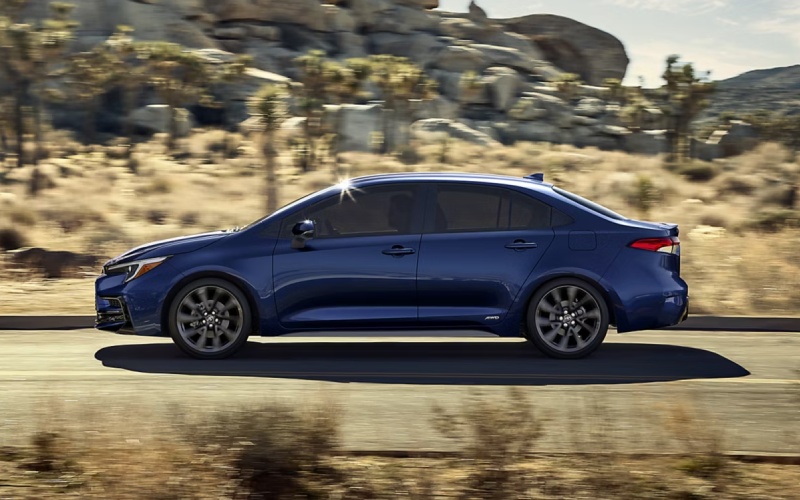
Venice Toyota – 2026 Toyota Corolla or 2026 Nissan Sentra: Which compact sedan delivers better driver-assist confidence for I-75 commutes around Bradenton, FL?
For many Gulf Coast commuters, a compact sedan lives in the fast lane during the week and cruises to coastal errands on the weekend. That reality puts driver-assist confidence near the top of the shopping list, which is why so many shoppers ask a straightforward question: between the 2026 Toyota Corolla and the 2026 Nissan Sentra, which one helps reduce fatigue and stress in stop-and-go traffic on I-75 around Bradenton, FL? Both models bring impressive tech, but the key differences shape how reliably those features serve you on the busiest days.
Start with the Toyota side. Every Corolla includes Toyota Safety Sense™ 3.0, which bundles Full-Speed Range Dynamic Radar Cruise Control, Lane Tracing Assist, Lane Departure Alert with Steering Assist, Pre-Collision System with Pedestrian Detection, Automatic High Beams, and Road Sign Assist. The benefit is consistency—no need to hunt for a certain trim to get core tools for highway guidance and speed modulation. The system’s tuning feels intuitive, with smooth acceleration and deceleration, predictable lane centering, and clear communication in the instrument cluster. Add the available 12.3-in. digital gauge cluster and 10.5-in. Toyota Audio Multimedia touchscreen, and the information layer becomes easy to read at a glance, helping attention stay on the road.
Sentra brings a competitive answer with available ProPILOT Assist, which coordinates steering assist and adaptive cruise for calmer freeway driving. In real-world use, ProPILOT Assist can meaningfully reduce the mental load during longer commutes, and the Sentra’s available “monolith” 12.3-inch dual displays put critical status updates front and center. The balance to consider is availability: you’ll typically need specific trims or packages to get the full feature set, and the rest of Sentra’s safety content varies by grade. If the plan is to shop once and know advanced assistance is included, Corolla’s standardization becomes a strong differentiator.
Confidence is more than the feature list—it’s how the car behaves when traffic patterns change suddenly. Corolla’s Full-Speed Range Dynamic Radar Cruise Control operates smoothly from highway speeds down to a crawl, and Lane Tracing Assist works with clear lane markings to support centered tracking on gentle curves. The Sentra’s ProPILOT Assist offers similar benefits, and many drivers appreciate how naturally it guides the car without feeling intrusive. Choose either system, and you’ll step up from conventional cruise control. Choose Corolla, and you know the system arrives standard across the lineup.
There’s also the question of traction and overall composure during quick weather changes or when paint markings are wet and reflective. Corolla Hybrid models offer available Electronic On-Demand All-Wheel Drive, which can direct power to the rear wheels when front grip is compromised. While AWD isn’t a substitute for attentive driving, it provides a broader envelope of stability when you ease onto an on-ramp with slick pavement. Sentra, by contrast, is front-wheel drive only. For many drivers, FWD is perfectly adequate. For those who want added traction assurance as part of their highway routine, Corolla retains a meaningful advantage.
Integrated tech matters, too. In both sedans, wireless Apple CarPlay® and Android Auto™ simplify hands-free calling and navigation prompts. Corolla’s available Drive Connect subscription adds Cloud Navigation and an Intelligent Assistant that accepts natural voice commands—useful when toggling routes after a traffic alert. Sentra’s NissanConnect® ecosystem offers remote features, a Wi-Fi Hotspot, and over-the-air capabilities; the available Bose Premium Audio System adds depth and clarity to podcasts and conference calls. Each car can fit modern life, yet Corolla’s seamless pairing with Toyota Safety Sense™ 3.0 creates a cohesive driver-assist and infotainment experience that many commuters prefer.
Powertrain choice influences long-term satisfaction. Corolla offers a responsive 2.0-liter gas model and a Hybrid lineup aimed at maximizing efficiency while maintaining a refined, quiet drive. That flexibility means drivers can prioritize range between fill-ups or stick with a traditional gas experience. Sentra uses a 2.0-liter engine with an Xtronic CVT; it’s tuned for easygoing drivability. If your commute involves long stretches behind variable-speed traffic, Corolla’s Hybrid smoothness can help keep the cabin calm, especially when paired with Full-Speed Range DRCC.
To help evaluate the details, here’s a quick framework that many shoppers find useful when comparing driver-assist confidence for regional commuting:
- System availability: Do the core highway assistance features come standard, or are they tied to specific trims and packages?
- Behavior in traffic: Are acceleration, braking, and lane guidance smooth and predictable across varying speeds?
- Display clarity: Are alerts and status cues easy to read on digital gauges and the center screen without stealing focus?
- Complementary features: Does the car offer additional tools—like available AWD, natural-voice assistants, or camera views—that support confidence when conditions change?
Apply this checklist, and the picture becomes clear. Corolla’s Toyota Safety Sense™ 3.0 standardization answers point one decisively. Its polished traffic behavior, aided by Full-Speed Range DRCC and Lane Tracing Assist, checks point two. The available 12.3-in. digital cluster and 10.5-in. touchscreen satisfy point three with excellent readability. And the availability of Electronic On-Demand AWD on Hybrid models, plus the Intelligent Assistant with Cloud Navigation, adds meaningful depth for point four. Sentra’s available ProPILOT Assist and dual 12.3-inch displays also perform well, yet requiring specific configurations to match that coverage is the key consideration.
If the primary goal is to cut through the stop-and-go grind with consistent assistance, Corolla sets the pace. Choosing the right compact sedan is ultimately about daily trust—how readily the car steps in to reduce stress without getting in the way. From well-tuned assistance to flexible powertrains, Corolla continues to deliver that trust in a compact package.
Venice Toyota proudly supports drivers with in-depth test drives that demonstrate exactly how these systems behave in real traffic. Our team is committed to straightforward, feature-focused guidance so every shopper understands what’s standard, what’s available, and how to tailor a build for a specific commute.
Frequently Asked Questions:
Does every Corolla include Toyota Safety Sense™ 3.0?
Yes. Toyota Safety Sense™ 3.0 is standard across the Corolla lineup, bringing advanced driver assistance to every trim.
Is Nissan’s ProPILOT Assist standard on all Sentra trims?
ProPILOT Assist is available on select Sentra trims. Availability can vary by package and configuration.
Which model offers all-wheel drive for added traction?
Corolla Hybrid offers available Electronic On-Demand AWD. Sentra is front-wheel drive only.
Do both sedans support wireless Apple CarPlay® and Android Auto™?
Yes. Both Corolla and Sentra offer wireless Apple CarPlay® and Android Auto™ compatibility for convenient smartphone integration.
Can I try these driver-assist features during a test drive?
Absolutely. Ask for a demonstration drive that includes freeway segments to experience adaptive cruise and lane centering in typical traffic.
For a personalized walk-through of driver aids and infotainment—serving Bradenton, Nokomis, and North Port—schedule a visit and bring your daily routes to life with a side-by-side comparison. The more these systems are tailored to your routine, the more value they deliver over time.
Request more 2026 Toyota Corolla information
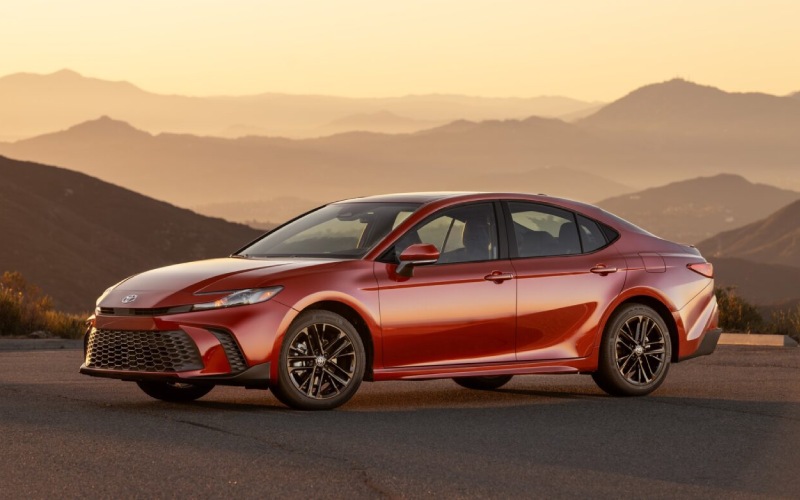
Venice Toyota – 2026 Toyota Camry or 2026 Hyundai Sonata: Which Midsize Sedan Handles Wet Roads Better around North Port, FL?
When Gulf Coast rain moves in, and pavement turns slick, many shoppers ask a simple question: which midsize sedan feels more planted when the weather shifts? We looked closely at the 2026 Camry and the 2026 Sonata with an eye toward traction, stability, and everyday confidence on wet roads across neighborhoods near North Port, FL.
The headline difference is how these models combine power and grip. Camry is an all-hybrid lineup with available Electronic On-Demand All-Wheel Drive that can proactively send torque to the rear axle when the system detects slip at the front. Translation: when a sudden shower leaves standing water by the curb, Camry’s system is ready to help you pull away cleanly from a stoplight or maintain poise through a gentle bend. Sonata takes a split approach. Gas trims can offer HTRAC All Wheel Drive, but the Sonata Hybrid remains front-drive only. If you prioritize hybrid efficiency and also want added traction, that single decision point heavily favors Camry. Both sedans offer selectable drive modes, but only Camry’s 4-Mode Drive Switch includes EV Mode for low-speed, short-distance electric-only operation, which can help smooth throttle inputs when inching through rainy traffic.
On the tech side, both are well equipped. Toyota Safety Sense™ 3.0 is standard on every Camry, integrating capabilities such as Lane Tracing Assist and Proactive Driving Assist to subtly help with steering or gentle braking in certain conditions. Available Traffic Jam Assist can add low-speed, hands-on support when backups build along Tamiami Trail. Sonata’s Hyundai SmartSense suite also brings robust coverage, with features like Forward Collision-Avoidance Assist with Pedestrian, Cyclist, and Junction Turning Detection, Lane Keeping Assist, Lane Following Assist, and Smart Cruise Control with Stop & Go. Sonata’s Limited Hybrid ups the game with Blind-Spot View Monitor and Surround View Monitor, excellent aids for visibility when rain and glare reduce contrast. The core takeaway is this: both cars deploy modern driver assistance, but Camry pairs those aids with the confidence of available AWD on a hybrid, which is rare in the segment.
Beyond AWD, traction is a whole-vehicle conversation. Tire choice, suspension tuning, and throttle mapping all contribute to how settled a car feels once the pavement darkens. Camry’s hybrid setup provides immediate electric torque off the line, then layers in engine power, which makes launches in the rain feel smooth rather than abrupt. The suspension’s tuning emphasizes stability without losing ride comfort, so you get reassuring weight transfer under moderate braking and predictable responses when steering around puddles. Sonata’s hybrid system emphasizes efficiency and does a fine job smoothing city speeds, while the gas N Line pursues outright punch; both are confident in their own right, but they aim at different targets. If you are weighing hybrid trims directly, Camry’s available AWD is the deciding feature for many coastal drivers.
Interior tech also supports wet-weather driving. Clear, high-contrast displays matter when the sky turns gray. Camry’s available 12.3-in. Digital Gauge Cluster and available Head-Up Display keep vital info front and center, and Toyota Audio Multimedia’s responsive interface makes it quick to swap to a storm radar or adjust settings without distraction. Sonata counters with an available panoramic curved display that elegantly joins the 12.3-in. touchscreen and 12.3-in. instrument cluster, creating a single sweep of information. Both offer wireless Apple CarPlay and Android Auto, so your favorite navigation apps are just a tap away. For audio, Camry’s available 9-speaker JBL® Premium Audio is tuned to the cabin for clarity even at lower volumes, helpful when rain noise rises. Sonata’s available 12-speaker Bose system offers a rich soundstage as well.
For shoppers building a short list, it helps to frame the decision with targeted criteria that reflect Gulf Coast realities, from wet intersections to occasional tropical downpours. Use the quick checklist below to line up priorities before you test drive.
- AWD on a hybrid: If traction in heavy rain is a must and you prefer hybrid smoothness, Camry’s available Electronic On-Demand All-Wheel Drive sets it apart.
- Driver-assistance mix: Both sedans offer comprehensive suites; Camry adds available Traffic Jam Assist, while Sonata Limited Hybrid offers Blind-Spot View Monitor and Surround View Monitor.
- Display clarity and controls: Consider whether you prefer Camry’s available Head-Up Display and straightforward menus or Sonata’s panoramic curved display aesthetic.
- Ride-and-response feel: Camry’s hybrid torque blends with composed suspension tuning; Sonata Hybrid emphasizes easygoing efficiency, with gas trims ranging from balanced to sporty.
To organize a back-to-back drive, consider this approach:
- Choose comparable trims with the features you value most, especially AWD availability.
- Drive an identical loop that includes stop-and-go, a few turns, and a stretch at 45 mph to feel transitions and steering load.
- Repeat the route in light rain if possible, or use wet test areas in a safe, open lot to feel launch and braking behavior.
Frequently Asked Questions:
Does the Camry Hybrid offer AWD while the Sonata Hybrid does not?
Yes. Camry Hybrid offers available Electronic On-Demand All-Wheel Drive, while the Sonata Hybrid is front-wheel drive only.
Is one sedan’s safety tech better for rainy commutes?
Both are comprehensive. Camry includes standard Toyota Safety Sense™ 3.0 on all trims and offers available Traffic Jam Assist. Sonata’s Hyundai SmartSense is also robust, and higher trims add helpful visibility tools like Blind-Spot View Monitor and Surround View Monitor.
What matters most for confidence on wet pavement?
A well-tuned stability system, predictable throttle mapping, good wiper coverage, quality tires, and—if you can get it—AWD on the configuration you want. Camry Hybrid checks all those boxes with its available AWD and refined hybrid mapping.
For a closer look and a thoughtful test-drive plan, Venice Toyota is here to help, serving Bradenton, Nokomis, and North Port with side-by-side comparisons and local insight. Bring your questions about traction, tech, and trim choices, and we will match you with the configuration that fits your routine and your roads.
Request more 2026 Toyota Camry information
Does the 2026 Toyota Tacoma or 2026 Ford Ranger offer better off-road technology for Nokomis, FL shoppers?
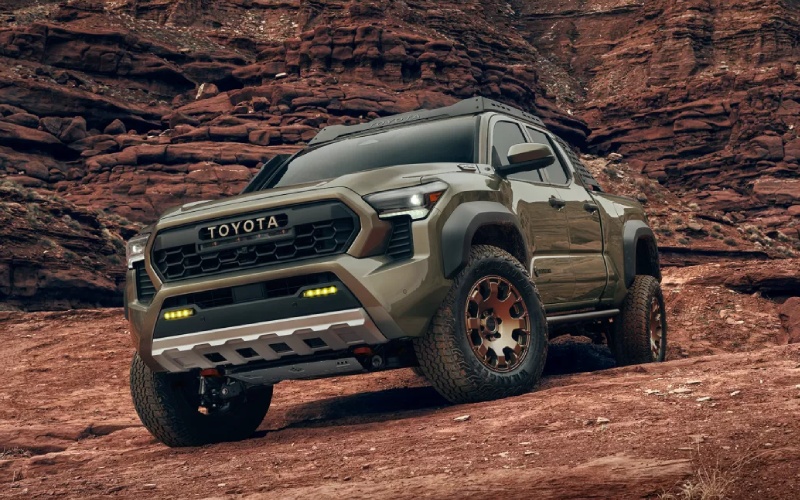
Venice Toyota – Does the 2026 Toyota Tacoma or 2026 Ford Ranger offer better off-road technology for Nokomis, FL shoppers?
When shoppers compare off-road tech, the question often sounds simple: which midsize truck gives me more confidence when the pavement ends? Looking closer at the 2026 Toyota Tacoma and the 2026 Ford Ranger reveals two distinct philosophies. Both bring useful hardware and displays, but Tacoma leans into a purpose-built trail toolkit that translates directly to sandy access roads, shell-packed paths, and uneven lots around Nokomis, FL. Ranger responds with features that are unquestionably helpful, particularly in Raptor and FX4 configurations, yet the Tacoma’s integrated approach to off-roading feels more turnkey for everyday adventure.
Start with visibility and vehicle awareness. Tacoma’s available next-generation Multi-Terrain Monitor provides front, side, and ground-level views to help you place the truck precisely when terrain gets tricky. It works hand-in-hand with the 12.3-inch digital gauge cluster and available 14-inch multimedia touchscreen, so your off-road information is presented where you want it. Ford’s available 360-Degree Camera and off-road screen are valuable, especially for tight trailheads and parking around trail staging areas. Where Tacoma separates itself is in the way camera views, traction controls, and mechanical systems sync together with a single purpose—helping you stay calm and precise, even when you are picking through ruts or easing down sandy boat ramps.
Mechanical articulation is another big differentiator. The 2026 Toyota Tacoma offers a Stabilizer Disconnect Mechanism that increases front wheel travel with the push of a button, allowing the suspension to better follow uneven surfaces. That translates to more tire contact, more confidence, and fewer spin-ups when you are riding across corrugations or diagonal washouts. Ranger Raptor brings an impressive Watts-link rear suspension and FOX Racing Shocks with Live Valve Technology designed for high-speed desert running. It is thrilling hardware, and it shines when the pace picks up. For the slower, more technical situations many Gulf Coast drivers encounter—think soft sand shoulders, boat launches, and washboarded cut-throughs—the Tacoma’s SDM and multi-link rear suspension focus on traction and composure rather than outright speed. That focus often feels more relevant day to day.
Power delivery supports confidence, too. Tacoma’s available i-FORCE MAX hybrid powertrain produces up to 326 horsepower and 465 lb.-ft. of torque, delivering instant response at low speeds when you are creeping over obstacles or pulling a small trailer up a ramp. Ranger counters with strong EcoBoost options, but it does not offer a hybrid. The hybrid’s smooth torque pairs naturally with Tacoma’s trail features, so you get consistent, controllable throttle response wherever you point the truck.
The smaller touches often decide which truck “works” better in real life. Tacoma’s available 2400W power supply converts the bed into a mobile power hub for air compressors, e-bike chargers, or portable fridges. Its factory Trailhunter grade adds an ARB steel rear bumper with recovery hooks, rock rails, and a high-mount air intake for dusty conditions—features that feel reassuring when you are miles from the main road. Ford’s Ranger brings helpful gear like Zone Lighting and an integrated box step for bed access, and the available Pro Power Onboard 400 W outlet is convenient for smaller devices. But when your weekend evolves from morning paddleboards to picnic prep and an evening surf-cast, Tacoma’s power and recovery ecosystem can eliminate a lot of improvising.
Driver-assist integration is worth highlighting. Toyota Safety Sense 3.0 is standard across Tacoma grades and includes helpful features for the drive to and from trailheads—like Lane Tracing Assist and Full-Speed Range Dynamic Radar Cruise Control—without demanding a step-up package. Tacoma also offers Trailer Backup Guide with Straight Path Assist and an integrated trailer brake controller, which can turn tricky back-downs into a confident one-person job. Ranger provides Ford Co-Pilot360 technologies and BLIS with Trailer Coverage, which are genuinely useful, and an available 360-Degree Camera to support low-speed maneuvering. The difference is how consistently Tacoma delivers that comprehensive toolkit across the lineup.
If your adventures include coastal parks, quick runs to the jetty, and family outings at sunset, the truck that makes setup and teardown easier is usually the one that gets chosen more often. The 2026 Toyota Tacoma’s mix of off-road visualization, button-activated articulation, hybrid torque, and practical power supply comes together in a way that feels intuitive and ready from day one. Ranger remains a compelling option, particularly in Raptor trim with its long-travel suspension, but many shoppers prioritize Tacoma’s slow-speed control and on-demand tools because they match the terrain they face most often.
To sum up the question of off-road tech for Nokomis, FL shoppers: both trucks can take you to the trail. Tacoma simply reduces the learning curve. Its controls are straightforward, the camera views are intentional, and the mechanical systems favor grip and stability over theatrics. If that sounds like your kind of confidence, it is worth driving Tacoma and sampling features like the Multi-Terrain Monitor and SDM back-to-back on mixed surfaces.
For guidance tailored to your weekends and weekday routines, Venice Toyota can help you compare the systems that matter most, demonstrate Tacoma’s trail features, and set you up for a test drive that reflects the way you actually drive. From camera angles to articulation to tow-friendly aids, the right truck should feel like a partner every step of the way.
Frequently Asked Questions:
What off-road features make Tacoma feel more confident at low speeds?
Its available Stabilizer Disconnect Mechanism increases front wheel articulation, the Multi-Terrain Monitor shows ground-level and surrounding views, and the i-FORCE MAX hybrid’s smooth torque helps you modulate throttle precisely over uneven surfaces.
Does Ranger offer similar trail cameras and suspension tech?
Ranger offers an available 360-Degree Camera with an off-road screen, and Ranger Raptor features a Watts-link rear suspension with FOX Racing Shocks. Tacoma’s camera system and SDM focus more on slow-speed traction and placement, which many Gulf Coast drivers prefer for mixed surfaces.
How do both trucks support towing at the ramp?
Tacoma offers an integrated trailer brake controller and Trailer Backup Guide with Straight Path Assist, which simplifies lining up and backing down. Ranger provides BLIS with Trailer Coverage and useful cameras to support awareness around the truck and trailer.
What about powering gear at the beach or campsite?
Tacoma’s available 2400W bed power can run tools, coolers, and chargers simultaneously. Ranger’s available Pro Power Onboard is rated at 400 W, which is convenient for smaller devices.
Which truck is easier to set up for overlanding?
Tacoma’s Trailhunter grade arrives with a high-mount air intake, ARB steel rear bumper with recovery hooks, rock rails, and Old Man Emu shocks—making it a ready-made platform for extended trips. Ranger requires more aftermarket additions to reach a similar setup.
We are proudly serving Bradenton, Nokomis, and North Port with a test-drive experience that mirrors your everyday routes and weekend plans, so you can feel how these features perform where it counts.
Request more 2026 Toyota Tacoma information
Venice Toyota – 2026 Toyota Corolla Tech Features That Streamline Daily Driving in North Port, FL
If you’re mapping out a smoother, more connected commute across North Port, FL, the latest Corolla tech suite is the shortcut you’ll enjoy every day. Toyota didn’t just load the cabin with screens—it prioritized clarity and ease of use, so you can set your route, cue your playlist, and keep tabs on traffic without the learning curve. The result is a cockpit that works with you, not against you, whether you’re leaving the driveway at dawn or wrapping up a late pickup on Tamiami Trail.
Let’s start with the interface you’ll touch most: Toyota Audio Multimedia. The available 10.5-in. touchscreen brings a crisp layout and quick responses, and it runs a modern voice-first system that gets smarter with a Drive Connect subscription. Say “Hey, Toyota” to ask for directions, adjust settings, or place a call—no fumbling or extra taps required. Wireless Apple CarPlay® and Android Auto™ compatibility keep your phone in your pocket while your messages, maps, and media appear in a clean, familiar format. It’s the best of your smartphone, now integrated with the car’s native controls.
Corolla also elevates what you see behind the wheel. The available 12.3-in. digital gauge cluster places speed, navigation prompts, audio info, and active safety alerts directly in your line of sight, with layouts you can tailor to your preferences. It’s not just bigger—it’s smarter, surfacing what matters most when you need it and stepping back when you don’t. That same theme of thoughtful tech extends to the rest of the cabin: a Smart Key System with Push Button Start streamlines entry, available Qi-compatible wireless charging keeps cables out of the way, and multiple USB-C ports ensure friends and family stay powered up.
Beyond convenience, Toyota Safety Sense™ 3.0 is a core reason tech-forward shoppers choose Corolla. These driver-assist features work in the background to help reduce fatigue and add a margin of confidence during dense traffic or on longer highway stretches. It’s the kind of technology you grow to appreciate after a single week, because it quietly handles chores you’d rather not think about—until the day you need it most.
- Pre-Collision System with Pedestrian Detection: Helps detect a vehicle or pedestrian ahead and can provide audio/visual alerts and automatic braking support.
- Lane Tracing Assist: Works with cruise control to help keep you centered in your lane by providing gentle steering support on clearly marked roads.
- Full-Speed Range Dynamic Radar Cruise Control: Helps maintain a preset distance from traffic ahead and can even bring the vehicle to a stop and resume.
- Lane Departure Alert with Steering Assist: Monitors lane markings and can provide steering support if it senses an inadvertent lane departure.
- Automatic High Beams: Automatically toggles between high and low beams to enhance visibility when appropriate.
- Road Sign Assist: Can detect certain road signs and display them on the instrument panel to help you stay informed.
For those who like their navigation tools capable and current, consider Drive Connect with Cloud Navigation, Intelligent Assistant, and Destination Assist. Cloud-based routing draws on up-to-date info, making it easier to plan around congestion or roadwork. Intelligent Assistant responds naturally to voice commands, and Destination Assist connects you with a live agent to help you find points of interest you might not know by name. Together, these services take the guesswork out of getting from A to B.
Staying connected outside the car is just as simple. With Remote Connect, you can use the Toyota app on a compatible smartwatch or smartphone to lock or unlock doors, start the engine, locate your parked vehicle, or check on vehicle status. Wi-Fi Connect turns the cabin into a hotspot and even integrates streaming platforms like Apple Music® and Amazon Music to keep the whole crew entertained without burning your phone’s data.
All of this runs on a tight, intuitive interface that avoids overwhelm—more signal, less noise. The hardware is tuned for smooth performance, the icons and menus are logically grouped, and frequent tasks are never more than a tap or a voice command away. You’ll appreciate how quickly it becomes second nature, especially on routes you drive often, where shaving those extra moments off setup pays back every single day.
Want to see how it all comes together? A quick test drive is usually all it takes to connect the dots—watch the 12.3-in. cluster adapt in real time, call up directions hands-free, and let Toyota Safety Sense™ 3.0 ease the workload in traffic. It’s a tight integration that feels mature and refined, backed by Toyota’s reputation for dependable electronics and thoughtful updates. Venice Toyota is proud to showcase how this feature set streamlines life on the go, one commute at a time.
Frequently Asked Questions:
Can I use my phone’s maps wirelessly?
Yes. Wireless Apple CarPlay® and Android Auto™ compatibility let you use your preferred navigation app without plugging in, while the available 10.5-in. touchscreen makes maps easy to read at a glance.
Is the digital gauge cluster customizable?
The available 12.3-in. digital gauge cluster offers multiple layouts and allows you to prioritize the info you want to see—like navigation prompts, audio details, or safety alerts—so it feels tailored to you.
Do the driver-assist features work in city traffic?
Absolutely. Full-Speed Range Dynamic Radar Cruise Control and Lane Tracing Assist are designed to help in stop-and-go as well as highway conditions, adding comfort and consistency to busy urban drives.
What connected services are worth adding?
Drive Connect enhances navigation and voice controls, Remote Connect brings app-based convenience for locking, starting, and vehicle status, and Wi-Fi Connect turns the car into a hotspot with integrated streaming—great for family trips.
How does the audio upgrade change the experience?
The available JBL® Premium Audio system adds nine speakers, an amplifier, and a dedicated subwoofer for richer, clearer sound that maintains detail even at lower volumes, perfect for podcasts or playlists.
Ready to get hands-on with the tech that makes everyday driving easier? Stop by our showroom, where our team—serving Nokomis, North Port, and Port Charlotte—can walk you through each feature, set up your smartphone profiles, and tailor a configuration that matches your routine from weekday commutes to weekend getaways.
Request more 2026 Toyota Corolla information
2026 Toyota Camry Hybrid Poise and AWD Confidence for Everyday Drives around Port Charlotte, FL
Venice Toyota – 2026 Toyota Camry Hybrid Poise and AWD Confidence for Everyday Drives around Port Charlotte, FL
When a sedan delivers genuine hybrid efficiency and the grip of available All-Wheel Drive, everyday drives feel lighter, simpler, and more fun. That is exactly the formula behind the 2026 Toyota Camry—now all-hybrid and available with Electronic On-Demand All-Wheel Drive—making it a smart choice for Port Charlotte, FL, drivers who split time between the Tamiami Trail, I-75, and neighborhood streets. In this deep dive, we will focus on two things you keep asking about: the hybrid system’s real-world feel and how the available AWD setup supports traction without adding hassle.
Let’s start with the hybrid experience. Camry’s system blends gasoline and electric power for smooth, responsive acceleration, especially from a stop or when you need a quick burst to merge. You will notice a quiet, easygoing character around town and a settled, refined hum at highway speeds. Four modes give you the freedom to tune the car’s personality: Normal strikes a great everyday balance; Sport sharpens accelerator response for a livelier feel; Eco helps optimize efficiency on long stints; and EV Mode lets you travel short distances at low speeds on electric power only, perfect for easing through late-night arrivals or early-morning departures.
Electronic On-Demand All-Wheel Drive is the next piece of the confidence puzzle. Rather than a heavy, always-on mechanical system, Camry’s available setup can send torque to the rear wheels only when the front wheels need help. That means you get traction support when it matters—like pulling away from a damp side street or rounding a sandy shoulder—without lugging extra hardware all the time. The result is an everyday sedan that feels planted, predictable, and calm, whether you are threading afternoon traffic on US-41 or heading across the Peace River Bridge for a weekend meet-up.
Inside, the technology suite complements that poised driving feel. The available 12.3-in. Toyota Audio Multimedia touchscreen is clean and intuitive, making it easy to move between maps and media. A 12.3-in. Digital Gauge Cluster and available Head-Up Display keep essential info within your line of sight, so you can keep your eyes up and ahead. For music lovers, the available 9-speaker JBL® Premium Audio System brings your playlists and podcasts to life with crisp, immersive sound—ideal for long commutes and quick store runs alike.
Safety and driver assistance reinforce the Camry’s everyday confidence. Toyota Safety Sense™ 3.0 brings a collection of supportive features designed to help you see, react, and stay centered. It includes a Pre-Collision System with Pedestrian Detection, Lane Departure Alert with Steering Assist, Lane Tracing Assist, Road Sign Assist, and Dynamic Radar Cruise Control. Standard Blind Spot Monitor (BSM) is a welcome companion on multi-lane stretches and during those quick lane changes that come up near Kings Highway. Available Traffic Jam Assist can help ease the grind when things slow to a crawl on I-75, adding a layer of relief to the routine.
If you are comparing sedans for Port Charlotte life—errands across town, kids’ drop-offs, a dinner run along US-41—Camry’s blend of hybrid smoothness and available AWD grip checks a lot of boxes. You get spirited acceleration, refined cruising manners, and technology that feels like a genuine upgrade without complicating your day. Below are a few quick highlights to keep in mind as you narrow the field.
- All-hybrid lineup: Every 2026 Camry uses a hybrid system for smooth response and strong efficiency.
- Available Electronic On-Demand AWD: Sends torque to the rear wheels when needed, helping maximize traction.
- 4-Mode Drive Switch: Choose Normal, Sport, Eco, or EV Mode to tailor the drive to your day.
- Driver-focused displays: Available 12.3-in. Digital Gauge Cluster and available Head-Up Display keep info close.
- Premium audio option: The available 9-speaker JBL® Premium Audio System elevates every playlist.
- Smart safety tech: Toyota Safety Sense™ 3.0 and Standard Blind Spot Monitor support confident driving.
On the design front, Camry balances sophistication and sport. Nightshade’s black accents and 19-in. satin black-finished wheels bring an assertive profile to the street, while XSE pairs its sport-tuned suspension with performance-flavored details. If classic refinement is your style, XLE’s leather- and microfiber-trimmed seats and available ventilated fronts feel like a calm exhale after a long day. No matter the grade, the proportions look just right, with sleek lighting and a confident stance that signals you care about both form and function.
How does all of this work for Port Charlotte driving? The short answer: smoothly. Quick responses make it easy to dart into openings on the Tamiami Trail. The chassis feels composed over patchwork pavement, and the steering settles nicely at speed for a reassuring highway feel. Add AWD for those moments when you pull away on a slick surface after a shower, and you have a sedan ready to handle what your week throws at it—without any drama.
Venice Toyota is here to help you compare grades and features, schedule an unrushed test drive, and show how the technology fits your routines. Our team is proudly serving Nokomis, North Port, and Port Charlotte with a streamlined, friendly process that puts you in control of the details. If you want a sedan that respects your time, rewards your commute, and still looks sharp in the driveway, the 2026 Camry belongs on your shortlist.
Frequently Asked Questions:
How does the Camry’s available Electronic On-Demand All-Wheel Drive work?
It continuously monitors wheel slip at the front and can send torque to the rear wheels when extra traction is needed. Because it engages only when conditions call for it, you get added grip without constant extra drag or complexity.
Will I notice the hybrid system in daily driving?
You will notice how smooth and responsive it feels—especially from a stop. Otherwise, the system works in the background to balance gasoline and electric power and recapture energy during braking. It is built to feel natural and easygoing.
Which displays are available, and why do they matter?
Available features include a 12.3-in. Toyota Audio Multimedia touchscreen, a 12.3-in. Digital Gauge Cluster, and an available Head-Up Display. Together, they simplify how you see navigation, audio, and drive data so you can stay focused on the road.
Is Blind Spot Monitor standard on the 2026 Camry?
Yes, Standard Blind Spot Monitor (BSM) is included, which is especially helpful for quick lane changes and busy multi-lane roads around Port Charlotte.
What are the benefits of the 4-Mode Drive Switch?
It lets you quickly tailor how the car responds: Normal for everyday balance, Sport for sharper acceleration, Eco to help optimize efficiency, and EV Mode for brief, low-speed electric-only travel.
If you are ready to feel how hybrid power and available AWD can change your routine, schedule time behind the wheel. A short drive is all it takes to sense the Camry’s calm precision, from its quiet pull-away to its settled highway stride and confident lane changes. The way it merges hybrid poise with smart traction support is exactly what makes it such a great fit for Port Charlotte living.
Request more 2026 Toyota Camry information
Towing Tech Made Simple for Port Charlotte, FL – How the 2026 Toyota Tundra Keeps Your Trailer in Line
Venice Toyota – Towing Tech Made Simple for Port Charlotte, FL – How the 2026 Toyota Tundra Keeps Your Trailer in Line
If you’re planning weekends around Charlotte Harbor, pulling a camper across US-41, or lining up a utility trailer for home projects, the towing tech on the 2026 Toyota Tundra can save time and stress. This isn’t just a powerful truck with up to 12,000 lbs. of max towing when properly equipped—it’s a smart partner designed to make the hookup, maneuvering, and hauling smoother from start to finish. Two standout features do a lot of heavy lifting: Trailer Backup Guide With Straight Path Assist and the available Panoramic View Monitor (PVM). Together, these tools pair cameras and sensors with on-screen guidance to help you back straight, spot obstacles, and park with confidence in those tight turnarounds near boat ramps and storage lots around Port Charlotte, FL.
Trailer Backup Guide With Straight Path Assist is especially useful the first time you back a new trailer. As you initiate reverse, the system uses inputs and camera views to help you keep the trailer pointed where you want it—without the usual overcorrections. It’s a reassuring assist for tight launches or when lining up within inches of a loading bay. Add the available PVM, and you can survey a 360-degree composite image right on Tundra’s available 14-In. Multimedia Touchscreen. The result is a clear, top-down view with selectable camera angles, so you can confirm surroundings and avoid misjudging curbs, pilings, or bollards. It’s confidence, digitized.
The i-FORCE and i-FORCE MAX powertrains complement these driver aids. The i-FORCE twin-turbo V6 is quick to respond with 389 horsepower and 479 lb.-ft. of torque, while the i-FORCE MAX hybrid setup climbs to 437 horsepower and 583 lb.-ft. of torque. That immediate torque helps when merging onto I-75 with a loaded trailer or pulling up a steep ramp. Meanwhile, Tundra’s Multi-Link Rear Suspension with coil springs works quietly in the background to enhance composure over bumps and stabilize loads when you’re navigating uneven surfaces around marinas or construction sites.
Inside the cab, the available 12.3-In. Digital Gauge Cluster and 14-In. Multimedia Touchscreen give you a clear picture of what the truck and trailer are doing. You can surface towing functions and relevant vehicle info on the displays, minimizing guesswork. Available Selectable driving and TOW/HAUL modes tailor throttle response and shift mapping, while the available Integrated Trailer Brake Controller (ITBC) lets you fine-tune trailer braking directly from the dash. That kind of fingertip control helps reduce sway and keeps everything consistent as you transition from city streets to highway speeds.
For buyers prioritizing off-pavement access to remote launches and campsites, the TRD Off-Road Package and TRD Pro trim bring suspension and tire upgrades meant for dirt, sand, and ruts. TRD Pro’s off-road suspension with FOX® shocks and 1.1-in. front lift, plus 18-in. BBS® forged-aluminum wheels with Falken® WILDPEAK All-Terrain tires, help maintain traction and control on rugged approaches. Pair that hardware with camera tech like PVM, and you’re better equipped to place tires precisely and avoid scrubbing trailer fenders when space is tight.
Below are a few simple steps to get more out of Tundra’s trailering tech on your next haul around Port Charlotte, FL:
- Position the truck and trailer: Align as straight as possible before selecting reverse to give the system a good starting point.
- Activate camera views: Use the available Panoramic View Monitor (PVM) to confirm surroundings and choose the angle that helps most.
- Engage Straight Path Assist: Follow on-screen guidance to maintain a steady, predictable line as you back up.
- Adjust trailer brakes: Use the available Integrated Trailer Brake Controller (ITBC) to fine-tune braking as load and road conditions change.
- Use TOW/HAUL mode: Optimize shift behavior for grades and stop-and-go traffic when pulling heavier loads.
Why do so many Gulf Coast drivers gravitate to Tundra for trailering? Consider these highlights:
- Torque-rich powertrains: Choose between i-FORCE and i-FORCE MAX for robust torque that helps on ramps, grades, and at launch sites.
- Camera-based confidence: Available PVM and Trailer Backup Guide with Straight Path Assist simplify tight maneuvers.
- Stability-minded suspension: The Multi-Link Rear Suspension with coil springs supports towing comfort and control.
- Cab-focused integration: The available 12.3-In. Digital Gauge Cluster and 14-In. Multimedia Touchscreen surface, towing info where you need it.
- TRD-ready hardware: Available TRD Off-Road Package and TRD Pro upgrades help on loose surfaces and uneven terrain.
When you add everyday usability to the equation, the 2026 Tundra becomes even more compelling. The Ultra-Durable Bed—available in 5.5-ft., 6.5-ft., and 8.1-ft. lengths—resists dents and corrosion, so you can load gear fearlessly. Interior appointments scale from durable, easy-to-clean materials to premium touches like available leather-trimmed seating and an available power tilt/slide panoramic roof with power sunshade. Want big sound for the ride home? Available JBL® Premium Audio brings clarity and punch to your playlist. And with Toyota Safety Sense™ 2.5 on every Tundra, you’ve got an advanced active safety suite watching the road with you on long drives and busy commutes.
It all adds up to a towing partner that’s not only powerful but also intuitive. Venice Toyota is serving Nokomis, North Port, and Port Charlotte with knowledgeable staff who can demonstrate these systems in real time and help you choose the grade and packages that fit your towing needs. Whether it’s a seasonal haul to storage, a weekly construction supply run, or a new fishing routine around Charlotte Harbor, Tundra’s tech and torque make the process smoother from hitch to highway.
Frequently Asked Questions:
How does Trailer Backup Guide With Straight Path Assist help new trailer owners?
It uses sensors and cameras to provide on-screen guidance as you reverse, helping you keep the trailer pointed straight and reducing overcorrections that can lead to jackknifing.
Is Panoramic View Monitor (PVM) useful even when I’m not towing?
Yes. PVM’s 360-degree composite view makes low-speed maneuvers and parking easier, especially in tight lots where curbs, posts, and pedestrians can be hard to see.
Which powertrain is better for frequent towing—i-FORCE or i-FORCE MAX?
Both are capable, but the i-FORCE MAX hybrid’s higher output (437 horsepower and 583 lb.-ft. of torque) can be advantageous for heavier or more frequent towing.
What features help stabilize the truck while towing?
Available Selectable driving and TOW/HAUL modes optimize shifting and throttle, the available Integrated Trailer Brake Controller (ITBC) lets you fine-tune braking, and the Multi-Link Rear Suspension with coil springs supports stable, composed handling under load.
Can I get off-road upgrades if I also tow?
Absolutely. The available TRD Off-Road Package and TRD Pro add hardware like specialized suspension and all-terrain tires that can help you reach remote campsites or launch points while maintaining strong towing performance.
When you’re ready to see these features in action, schedule a visit and explore the Tundra’s displays, camera views, and trailering tools firsthand. One test drive is often all it takes to feel how the tech and torque translate into real confidence at the hitch.
Venice Toyota can help you compare trims and packages, from tech-forward models with the available 14-In. Multimedia Touchscreen and 12.3-In. Digital Gauge Cluster to off-road-oriented builds that prioritize clearance and damping control. With a thoughtful mix of strength and smarts, Tundra brings Port Charlotte, FL, drivers a trailering experience that feels natural on day one—and keeps getting better.
Request more 2026 Toyota Tundra information
Venice Toyota – Towing Confidence and Camera Tech on the 2026 Toyota Tacoma for North Port, FL, Drivers
If you’re planning to tow a boat to local launches, haul a pair of dirt bikes to weekend trailheads, or simply want easier maneuvering in tight neighborhoods, the 2026 Toyota Tacoma’s towing and camera tech deserve a closer look. Toyota built this midsize pickup with smart systems that simplify tasks that used to feel like a two-person job, pairing confidence-inspiring cameras with guidance tools and helpful driver-assistance features. The result is a truck that’s tough and capable, yet surprisingly easy to live with when a trailer is on the hitch or when an off-camber trail throws a surprise your way.
Start with Tacoma’s available Advanced Towing Technology. Trailer Backup Guide with Straight Path Assist helps you reverse more predictably by sending intuitive guidance to the wheel, so you can correct early and avoid oversteer as you align down a ramp or into a narrow driveway. The available integrated trailer brake controller puts adjustment at your fingertips inside the cab, allowing you to fine-tune braking force and match your trailer’s load. And the Blind Spot Monitor (BSM) can expand its coverage when a trailer is detected, adding helpful awareness where you need it most. These are the kinds of features that take the tension out of towing at busy boat launches around North Port, FL, or when you’re threading to a campsite just after dusk.
Visibility is where Tacoma goes from helpful to standout. The available 3D Multi-Terrain Monitor (MTM) is a next-generation camera system that lets you toggle between front, rear, and side views, right on the available 14-In. Audio Multimedia Display. In practice, this means more than just seeing what’s ahead—it’s the difference between confidently clearing a submerged stump at the ramp and guessing in the dark. On the trail, MTM can reveal obstacles lurking just beyond the crest or sitting near your rock sliders. Paired with an available 12.3-In. Digital Gauge Cluster that can show selectable off-road pages, you get a cockpit that keeps your eyes up and information within a fast glance.
Underpinning all that control is Tacoma’s smart chassis and suspension toolbox. A multi-link rear suspension adds refinement and stability, while off-road-focused trims unlock hardware that’s truly trail-ready. The Stabilizer Disconnect Mechanism (SDM) can increase articulation up front, so you maintain contact patch over offset ledges and washouts. Crawl Control (CRAWL) helps modulate throttle and brakes at very low speeds, ideal for easing through a rut or inching down a slick ramp with a trailer in tow. These systems don’t replace driver skill—they amplify your control, reduce fatigue, and make tricky maneuvers feel repeatable even when conditions change.
Inside, Tacoma ties everything together with tech that feels familiar and fast. The available 14-In. Audio Multimedia Display runs Toyota’s latest system, complete with wireless Apple CarPlay® integration and SiriusXM® compatibility. That means your maps and music are just a tap or voice command away while you keep an eye on your trailer angle or the terrain ahead. And because towing is about more than backing up, Tacoma’s steering, throttle calibration, and available powertrains are tuned for calibrated response at freeway speeds, too—so passing with a light trailer or merging into the afternoon rush doesn’t feel like a gamble.
Speaking of powertrains, Tacoma offers two personalities: the i-FORCE turbocharged gas engine for responsive, energetic acceleration and the i-FORCE MAX turbocharged hybrid powertrain that layers in electrified torque for robust, confident pull. Both pair beautifully with the available Advanced Towing Technology, but the hybrid’s added low-end punch can feel especially reassuring when you’re starting on an incline or pulling out from a side street with a trailer attached. The choice comes down to how you drive, what you tow, and how often you head for the hills—or the marina.
Here’s a focused snapshot of the tech many shoppers ask about most:
- Trailer Backup Guide with Straight Path Assist: Helps keep your trailer aligned while reversing, reducing overcorrection and stress.
- Integrated trailer brake controller: Built-in adjustability lets you fine-tune trailer braking to match load and road conditions.
- Blind Spot Monitor (BSM) with trailer coverage: Can extend detection zones when a trailer is connected for added awareness.
- 3D Multi-Terrain Monitor (MTM): Front, rear, and side camera views help you spot obstacles and stay precise in tight quarters.
- Stabilizer Disconnect Mechanism (SDM): Increases articulation at the touch of a button to help maintain traction over uneven terrain.
- Crawl Control (CRAWL): Assists with ultra-low-speed modulation for confident climbing and descending.
Local drivers often want to know how all of this performs where they actually tow and explore. The short answer: very well. Whether you’re lining up a personal watercraft at a neighborhood launch, navigating tight streets bordered by palm and oak, or easing into a shaded back-in campsite, the combination of camera views and steering guidance helps you anticipate and correct early. That ability to plan your moves—rather than chase them—adds a calm, methodical feel to what used to be tense moments. And when the pavement ends, Tacoma’s chassis tuning and off-road controls kick in, transforming a rough approach into a careful crawl with traction you can trust.
When you’re ready to get hands-on time with these systems, our team will set up a demo route that includes both straightforward reversing and trickier angles, along with a short loop to show how 3D MTM and off-road features feel underfoot. You’ll leave with a clear sense of how Tacoma translates technology into real capability you can rely on day one. Venice Toyota is serving Nokomis, North Port, and Port Charlotte with knowledgeable product specialists who love to talk through scenarios, compare trims, and make sure you drive away with exactly the features you’ll use most.
Frequently Asked Questions:
How hard is it to learn Trailer Backup Guide with Straight Path Assist?
Most drivers get comfortable within a few tries. The on-screen guidance and steering inputs are intuitive, which shortens the learning curve and helps you build good habits that carry over even when you’re backing up without the feature enabled.
Can the 3D Multi-Terrain Monitor help when I’m not off-roading?
Absolutely. The same camera views that are helpful around rocks and ruts also shine in day-to-day use—like checking for low posts in a crowded lot, aligning to a utility trailer, or easing past curbs that sit just out of your natural line of sight.
Which Tacoma trims include the most towing tech?
Advanced Towing Technology is available across multiple grades, and the integrated trailer brake controller is available as well. We can help you compare configurations so you get the features you want alongside the suspension, cab, and bed setup that fits your lifestyle.
Is the i-FORCE MAX hybrid better for towing than the gas engine?
Both powertrains are engineered for confident towing. The i-FORCE MAX turbocharged hybrid shines with added low-end torque, which can feel especially reassuring when you’re starting on an incline with a loaded trailer or merging into traffic.
Do the driver-assistance features work with a trailer attached?
Yes—many Tacoma driver-assistance features are designed to operate when towing, and the Blind Spot Monitor (BSM) can expand its detection area when a trailer is recognized. We’ll walk you through which settings to enable for your specific trailer and route.
Request more 2026 Toyota Tacoma information
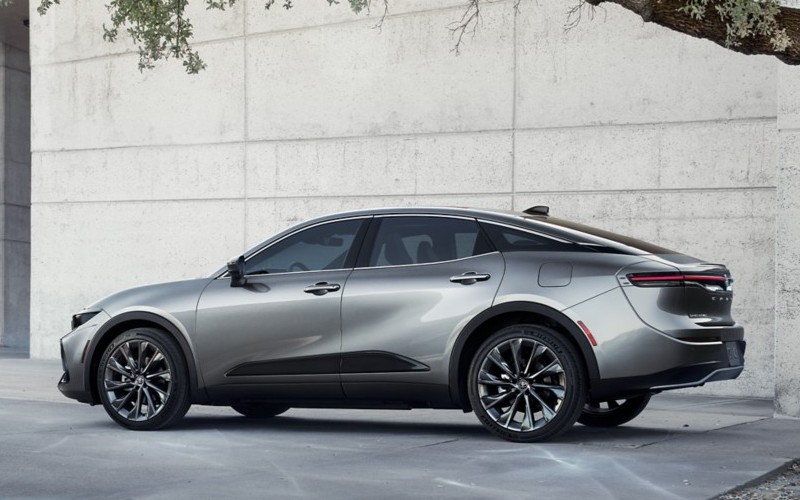
Venice Toyota – Toyota vs Hyundai for Beach-Season Condo Living in Venice, FL
Life on the Island of Venice and along the US 41 Bypass calls for vehicles that handle heat, salty air, short hops to the beach, and weekend runs up to Sarasota without breaking a sweat. Many shoppers compare Toyota and Hyundai across compact and midsize SUVs, sedans, and electrified options. At Venice Toyota, we help local drivers sort through the details with a coastal-living lens so the next ride fits condo parking realities, unpredictable Gulf showers, and year-round traffic patterns around Venice Avenue and Tamiami Trail.
Our angle is simple and relevant to everyday life here: which brand better supports condo and HOA living where charging access can be limited, where sun and salt demand smart upkeep, and where smooth, low-stress driving matters on drawbridge approaches, roundabouts, and stop-and-go stretches by the beach?
Electrified driving is a standout difference. Toyota leans into hybrids across body styles—compact crossovers like Toyota RAV4 Hybrid and Toyota Corolla Cross Hybrid, sedans like Toyota Camry Hybrid and Toyota Corolla Hybrid, three-row choices such as Toyota Highlander Hybrid and Toyota Grand Highlander Hybrid, plus Toyota Sienna with a hybrid system standard. These models deliver quiet, efficient performance without requiring a plug, which is a practical advantage for many Venice condo communities that do not offer dedicated Level 2 charging or overnight access to a charger.
Hyundai offers strong electric options and plug-in choices, including popular all-electric nameplates. For drivers with a private garage and reliable home charging, that can work well. For many Venice residents and seasonal visitors who park in shared lots, rely on community carports, or split time between Florida and another home, Toyota’s self-charging hybrid approach simplifies ownership—just fill up and go, with EV-like city efficiency for beach-town speeds and heavy-season traffic.
Heat, sun, and salt exposure are part of daily life here, so durability and support matter. Toyota’s reputation for long-haul reliability, combined with our Venice Toyota Service Center and Genuine Toyota Parts, helps protect your investment over the miles. ToyotaCare—our no-cost maintenance plan with 24-hour roadside assistance—adds confidence early in ownership. Routine services such as Toyota Express Maintenance oil changes, cabin air filters, and brake inspections help keep performance crisp despite summer humidity, frequent A/C use, and occasional sand tracked into the cabin after a Caspersen Beach morning.
Hyundai vehicles offer comprehensive features and modern tech as well. In our experience working with Venice shoppers, easy service access and consistent parts availability can make the difference over years of coastal driving. Our technicians are Toyota-trained and know systems such as Toyota Safety Sense and the Star Safety System inside and out, so you get quick diagnostics and factory-correct repairs.
Ride quality and drivability in beach traffic deserve a closer look, too. Toyota’s hybrid eCVT systems favor smooth, quiet takeoffs from a stop, which is welcome on the Venice Avenue Bridge and around Jacaranda Boulevard roundabouts. Direct Shift-CVT designs in models like the Toyota Corolla deliver a natural, responsive feel for city speeds, while 8-speed automatics in gasoline SUVs and trucks keep highway cruising calm on I-75 runs to visiting family. Across segments, chassis tuning aims for a planted, predictable feel that reduces fatigue when snowbird season crowds the lanes.
Hyundai emphasizes tech-forward cabins and confident freeway manners as well. For neighborhood use cases—quick Publix stops, downtown lunch on Miami Avenue, and repeated short trips—Toyota hybrids shine with electric assist at low speeds, sipping fuel while keeping engine noise low. That steady, relaxed character pairs well with the pace of Venice’s coastal streets.
Wet-weather confidence is another shared priority. Sudden Gulf showers can leave slick patches and standing water near curbs. Toyota offers available Electronic On-Demand All-Wheel Drive on many hybrids, plus robust off-pavement tuning in models with TRD capability. RAV4, 4Runner, and Tacoma deliver useful ground clearance for uneven parking surfaces or unpaved trailheads near Myakka. Hyundai’s available AWD systems help stability in rain as well, and both brands include modern driver assistance suites. With Toyota Safety Sense standard on most Toyota vehicles, features such as Lane Tracing Assist, Lane Departure Alert with Steering Assist, and Dynamic Radar Cruise Control support confidence on US 41 and during longer drives when traffic ebbs and flows.
To make this more concrete for shoppers comparing popular body styles, here is how the strengths tend to play out for our coastal community.
- Compact crossovers for island errands and beach gear transport
- Midsize and three-row SUVs for visiting family and airport trips
- Sedans and hatchbacks for efficient daily driving and easy parking
- Minivans and adventure vehicles for gear-heavy weekends
- Trucks for trailering small boats or jet skis
In compact crossovers, Toyota RAV4 and Toyota Corolla Cross emphasize broad trim coverage, available hybrid power, and straightforward utility for chairs, umbrellas, and a cooler. Hyundai’s comparable crossovers highlight cabin tech and sleek styling. In midsize and three-row SUVs, Toyota Highlander and Toyota Grand Highlander focus on family flexibility and hybrid availability, while comparable Hyundai models emphasize features-per-trim. In sedans, Toyota Corolla and Toyota Camry bring proven drivetrains and standard Toyota Safety Sense, while Hyundai sedans offer expressive design and modern infotainment. For minivans and adventurous family use, the Toyota Sienna’s hybrid standardization pairs smooth power with impressive everyday efficiency, a notable fit for coastal carpool duty. For boats and trailers, Toyota Tacoma and Toyota Tundra—plus available i-FORCE MAX hybrid powertrains—offer confident towing with durable frames and available trailering aids.
If you plan to store a vehicle seasonally, Toyota’s ease of reactivation after a few months away is another practical benefit. Hybrids start up and settle into normal operation without special steps, and our service team can perform quick checks when you return—battery health, tire pressure, and cabin filters—so you can head straight to Nokomis Beach for sunset.
Not sure how to structure a test drive for Venice conditions? Try a loop that mirrors daily life: start near our showroom on US 41 Bypass South, head over the Venice Avenue Bridge to gauge hill-hold and throttle response, circle downtown to check tight parking and camera clarity, then hop back on Tamiami Trail to feel highway stability and wind noise. Bring a beach chair and a small cooler to confirm cargo fit, and, if grandkids visit, test car seat access with the rear doors and LATCH anchors.
Bottom line for condo living, beach-town errands, and seasonal travel: both brands deliver compelling options, but Toyota’s hybrid breadth, smooth low-speed manners, standard Toyota Safety Sense, and the support of our Venice Toyota team make ownership simple and confidence-inspiring along the Gulf Coast. From Genuine Toyota Parts to Toyota Express Maintenance and ToyotaCare, we back the drive long after delivery day.
Frequently Asked Questions:
Do I need All-Wheel Drive for Venice streets?
Front-wheel drive suits most Venice driving, but available Toyota AWD can help with wet pavement, boat ramps, and occasional sandy parking areas. If beach access roads or trips to nature preserves are on the agenda, ask our team to set up back-to-back FWD and AWD test drives.
Will Florida heat affect a Toyota hybrid battery?
Toyota hybrids use proven thermal management and intelligent charging strategies designed for hot climates. Regular maintenance, clean cabin air filters, and parking in shade when possible support battery longevity. We can review inspection intervals and best practices during your visit.
How does Toyota Safety Sense help around US 41 and downtown Venice?
Features such as Lane Tracing Assist, Lane Departure Alert with Steering Assist, and Dynamic Radar Cruise Control can help reduce fatigue in traffic, support centering through roundabouts, and provide smoother following gaps during seasonal congestion. Always remain attentive and ready to take control.
What about hauling beach gear or a small boat?
Compact Toyota SUVs easily swallow chairs, umbrellas, and coolers, and many offer roof rail compatibility for boards. For towing jet skis or a skiff, Toyota Tacoma and Toyota Tundra—plus available i-FORCE MAX—provide robust towing tools and helpful camera views. Bring your gear measurements, and we will confirm fit.
How can I protect my vehicle from salty air near the Gulf?
Frequent rinses, especially the underbody, plus regular Toyota Express Maintenance for fluids, filters, and brake inspections go a long way. Genuine Toyota parts help preserve factory performance. Ask about all-weather floor liners and cargo mats to keep sand at bay.
We invite you to visit Venice Toyota at 900 US 41 By-Pass South for a personalized comparison drive. Our team will tailor recommendations to your garage or carport setup, daily route, and weekend plans, then set you up with a Toyota that feels right at home from Sharky’s sunsets to Sarasota day trips. Let us help you choose the Toyota that fits beach-season condo living in Venice perfectly.
Request more information
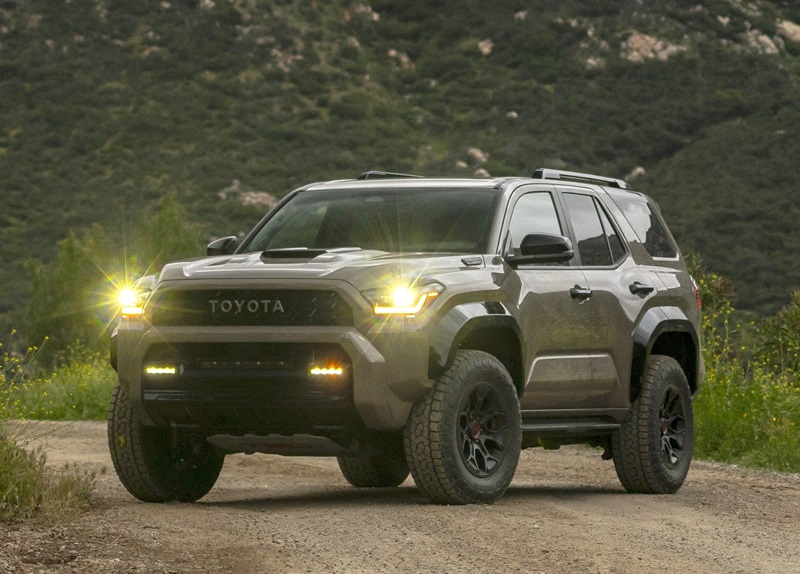
Venice Toyota – Toyota vs. Honda for Gulf Coast Storm-Ready Commuting near Bradenton, FL
Living along Florida’s Gulf Coast means planning for more than sunshine. From summer downpours that pop up over Palma Sola Bay to stop-and-go traffic on US 41 and I-75, Bradenton-area drivers ask a lot of their vehicles. At Venice Toyota, we help shoppers compare Toyota and Honda through a practical, local lens—how well each brand’s sedans, SUVs, trucks, and electrified models handle heat, rain-slick bridges, evacuation traffic, and weekend boat trips. Both brands are respected, but for the daily realities of Manatee and Sarasota counties, Toyota’s breadth of safety tech, hybrid choices, and truck/SUV capability tends to fit our coastal lifestyle especially well.
Let’s start with everyday confidence in Florida weather. Afternoon storms and heavy spray on the Anna Maria Island Bridge can challenge lane-keeping and visibility. Toyota Safety Sense comes standard on most Toyota vehicles and includes advanced features designed to help in low-contrast, low-traction conditions. Honda offers Honda Sensing across much of its lineup, and it is also a robust suite. The difference we see day to day is how broadly Toyota equips its lineup with helpful driver-assist features and how many models give you an upgrade path—so the sedan a student uses to commute to State College of Florida and the SUV a family takes down Cortez Road both get meaningful support.
- Collision avoidance clarity: Toyota Safety Sense features a Pre-Collision System with Pedestrian Detection that can help alert and support braking in busy crosswalks around Old Main Street, while Honda’s Collision Mitigation Braking System offers similar protection.
- Lane discipline in rain: Toyota’s Lane Departure Alert with Steering Assist and Lane Tracing Assist work with Dynamic Radar Cruise Control to help you stay centered when storms reduce lane visibility; Honda’s Lane Keeping Assist System and Adaptive Cruise Control with Low-Speed Follow deliver comparable assistance.
- Sign and speed awareness: Toyota Road Sign Assist and Honda Traffic Sign Recognition can help keep you informed when glare off the Intracoastal makes roadside signs harder to read.
- Stop-and-go support: Select Toyota models offer available Traffic Jam Assist that can help ease the grind on US 41 or during I-75 slowdowns; Honda provides similar assistance through its driver-assist systems, depending on model and trim.
Hybrid performance under Florida heat is another key factor for Bradenton commuters. Air conditioning is not optional here—it is essential—and hybrids that stay efficient with the A/C running make a real difference during summer gridlock. Toyota’s hybrid leadership shows up in the number of choices you have: from Corolla Hybrid and Camry to RAV4 Hybrid, Highlander Hybrid, Grand Highlander Hybrid, Sienna, Sequoia, and our truck lineup with Tacoma i-FORCE MAX and Tundra i-FORCE MAX. Honda shines with CR-V Hybrid and Accord Hybrid, and Civic Hybrid is returning, but Honda’s hybrid footprint is narrower, and there is no hybrid pickup or body-on-frame hybrid SUV in its U.S. lineup at this time. For shoppers who want smooth, quiet acceleration on the Green Bridge, strong A/C performance, and fewer fuel stops, Toyota gives you more body styles and sizes to match your needs—plus a plug-in option in the RAV4 Prime and a fully electric Toyota bZ4X for those able to charge at home.
Then there’s weekend versatility. Around Bradenton, a “normal” Saturday might include a paddle at Robinson Preserve, a beach run to Coquina, or launching a boat at Warner’s Bayou or Kingfish. Toyota’s SUV and truck lineup is tuned for this Gulf Coast rhythm. 4Runner and Sequoia ride on robust underpinnings, and Tacoma and Tundra offer available 4WD, available Multi-Terrain Select, and available Crawl Control to help manage sand and slick ramps. Honda’s Pilot and Passport are comfortable and capable for light trails, and Ridgeline is a clever, smooth-riding unibody pickup, but when you need extra ground clearance, low-speed traction tools, and heavier-duty components for towing and launching, Toyota typically brings more purpose-built options. As always, never drive through deep or moving water, and follow local guidelines for ramp safety.
Durability matters on the coast. Salt air, sun, and sudden rain challenge paint, seals, and electrical systems. Toyota’s long-standing reputation for reliability—backed by Toyota Genuine Parts and our factory-trained service—helps Venice-area owners feel confident mile after mile. Every new Toyota also includes ToyotaCare, a no-cost maintenance plan with 24-hour roadside assistance, which fits the way our neighbors drive—lots of short trips, frequent A/C use, and seasonal traffic. At Venice Toyota, we complement that with Toyota Express Maintenance to keep you moving quickly, and our team can help you plan factory-scheduled care so your vehicle stays ready for busy school weeks and hurricane season alike.
If you are cross-shopping Toyota and Honda for a near-Bradenton life—sun, storms, bridges, beaches—here are the strengths we see in day-to-day ownership based on customer feedback and our hands-on experience:
- Hybrid breadth for real life: Toyota offers more hybrid SUVs and trucks, giving you options sized for everything from downtown parking to family road trips to Tampa.
- Truck and SUV capability: For towing to Palma Sola or navigating sandy access roads, Toyota’s available 4WD tools and body-on-frame options excel.
- Ownership peace of mind: ToyotaCare and Toyota Genuine Parts, plus our Certified Used Toyota program, support long-term value in Florida’s climate.
- Safety suite availability: Toyota equips most of the lineup with advanced driver-assist features, making it easy to get confidence-boosting tech without hunting for rare trims.
We also know the test drive tells the real story. When you visit us at 900 US 41 By-Pass South in Venice, we will tailor a route that mirrors your routine—surface streets, highway merges, and a causeway segment when possible—so you can feel how Toyota’s tuning handles crosswinds, heavy rain, and sun glare. We encourage side-by-side drives if you are also considering a Honda, so your decision reflects what you feel behind the wheel, not just what you read on a spec sheet.
- Simulate your commute: We will map a loop that includes US 41 traffic and an I-75 merge so you can evaluate visibility, braking feel, and driver-assist smoothness.
- Test A/C and cabin comfort: Let the vehicle sit in the sun, then check how quickly the A/C cools and how well ventilated seats and materials resist the afternoon heat.
- Check storage usability: Bring your beach gear, stroller, or golf clubs to confirm cargo space, lift-over height, and seat-folding flexibility.
- Assess trailering needs: If you tow, talk to our team about hitch setups, wiring, and available integrated towing tools on Toyota trucks and SUVs.
- Review service support: Ask about ToyotaCare coverage, Toyota Express Maintenance, and how we schedule around storm forecasts during hurricane season.
As your local Toyota partner near Bradenton, our approach is simple—match you with the right vehicle for coastal life, then back it with experienced service and genuine parts. Whether you want the easy efficiency of a RAV4 Hybrid for Cortez Road errands, the family-ready space of a Grand Highlander Hybrid for IMG Academy carpools, or the muscle of a Tundra i-FORCE MAX for weekend fishing, we are ready to help you compare options clearly and drive home confidently.
If you are just starting your search, try our online tools to get pre-approved, browse incoming inventory, or value your trade, then visit us for a tailored test drive. If you are farther along, bring your shortlist—we will line up comparable Toyotas, unpack the tech in plain language, and make the decision easy. We look forward to welcoming you to Venice Toyota and helping you navigate Gulf Coast driving with assurance all year long.
Frequently Asked Questions:
Which brand offers more hybrid choices suited to Bradenton’s heat and traffic?
Toyota. You will find hybrid options across compact, midsize, and three-row SUVs, plus hybrid pickups like Tacoma i-FORCE MAX and Tundra i-FORCE MAX. Honda’s CR-V Hybrid and Accord Hybrid are strong, but Toyota’s lineup provides more sizes and use cases for coastal commuting and family life.
How does Toyota Safety Sense help in sudden Gulf Coast downpours?
Features such as the Pre-Collision System with Pedestrian Detection, Lane Departure Alert with Steering Assist, and Dynamic Radar Cruise Control can assist with alerts, lane centering, and smoother following gaps when visibility tightens—support you will appreciate when storms roll across the Manatee River. Always drive attentively and adjust speed for conditions.
Are Toyota hybrids comfortable and efficient with the A/C running full blast?
Yes. Toyota’s hybrid systems are engineered to deliver smooth, quiet power and strong efficiency even with continuous A/C use, which is essential in Florida. Many owners find the calm, electric-boosted takeoff helpful when inching through beach traffic or evacuation lines.
What if I need a vehicle for boat ramps and sandy access roads on weekends?
Consider Toyota SUVs and trucks with available 4WD, available Multi-Terrain Select, and available Crawl Control. 4Runner, Sequoia, Tacoma, and Tundra provide the kind of traction tools and hardware that help with slick ramps and light sand. Always follow safe towing practices and avoid deep or moving water.
How does Venice Toyota support ownership after the sale?
Every new Toyota includes ToyotaCare, a no cost maintenance plan with 24-hour roadside assistance. Our Toyota Express Maintenance helps you stay on schedule, and our team uses Toyota Genuine Parts for fit and performance. We also offer Certified Used Toyota vehicles that have passed a 160-point inspection for added peace of mind.
Ready to compare in person? Visit us at Venice Toyota—minutes from Bradenton—for a route that mirrors your daily drive, expert guidance on safety and hybrid tech, and a team committed to Gulf Coast-ready solutions.
Request more information
Connect with us


