


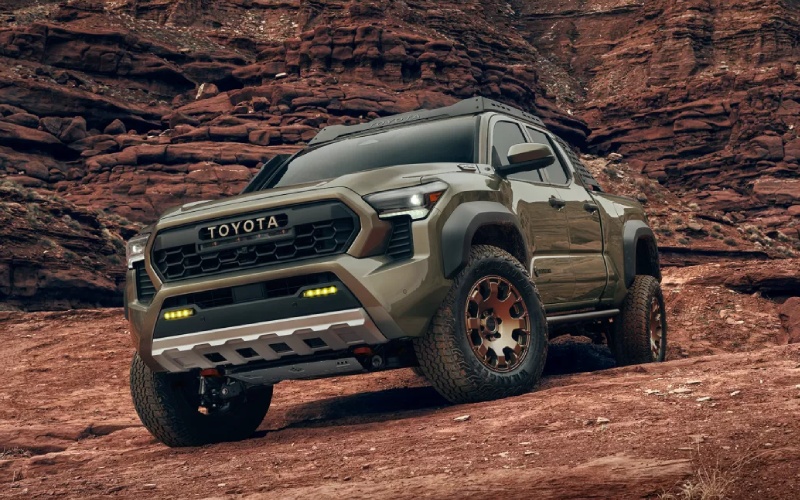
Venice Toyota – Does the 2026 Toyota Tacoma or 2026 Ford Ranger offer better off-road technology for Nokomis, FL shoppers?
When shoppers compare off-road tech, the question often sounds simple: which midsize truck gives me more confidence when the pavement ends? Looking closer at the 2026 Toyota Tacoma and the 2026 Ford Ranger reveals two distinct philosophies. Both bring useful hardware and displays, but Tacoma leans into a purpose-built trail toolkit that translates directly to sandy access roads, shell-packed paths, and uneven lots around Nokomis, FL. Ranger responds with features that are unquestionably helpful, particularly in Raptor and FX4 configurations, yet the Tacoma’s integrated approach to off-roading feels more turnkey for everyday adventure.
Start with visibility and vehicle awareness. Tacoma’s available next-generation Multi-Terrain Monitor provides front, side, and ground-level views to help you place the truck precisely when terrain gets tricky. It works hand-in-hand with the 12.3-inch digital gauge cluster and available 14-inch multimedia touchscreen, so your off-road information is presented where you want it. Ford’s available 360-Degree Camera and off-road screen are valuable, especially for tight trailheads and parking around trail staging areas. Where Tacoma separates itself is in the way camera views, traction controls, and mechanical systems sync together with a single purpose—helping you stay calm and precise, even when you are picking through ruts or easing down sandy boat ramps.
Mechanical articulation is another big differentiator. The 2026 Toyota Tacoma offers a Stabilizer Disconnect Mechanism that increases front wheel travel with the push of a button, allowing the suspension to better follow uneven surfaces. That translates to more tire contact, more confidence, and fewer spin-ups when you are riding across corrugations or diagonal washouts. Ranger Raptor brings an impressive Watts-link rear suspension and FOX Racing Shocks with Live Valve Technology designed for high-speed desert running. It is thrilling hardware, and it shines when the pace picks up. For the slower, more technical situations many Gulf Coast drivers encounter—think soft sand shoulders, boat launches, and washboarded cut-throughs—the Tacoma’s SDM and multi-link rear suspension focus on traction and composure rather than outright speed. That focus often feels more relevant day to day.
Power delivery supports confidence, too. Tacoma’s available i-FORCE MAX hybrid powertrain produces up to 326 horsepower and 465 lb.-ft. of torque, delivering instant response at low speeds when you are creeping over obstacles or pulling a small trailer up a ramp. Ranger counters with strong EcoBoost options, but it does not offer a hybrid. The hybrid’s smooth torque pairs naturally with Tacoma’s trail features, so you get consistent, controllable throttle response wherever you point the truck.
The smaller touches often decide which truck “works” better in real life. Tacoma’s available 2400W power supply converts the bed into a mobile power hub for air compressors, e-bike chargers, or portable fridges. Its factory Trailhunter grade adds an ARB steel rear bumper with recovery hooks, rock rails, and a high-mount air intake for dusty conditions—features that feel reassuring when you are miles from the main road. Ford’s Ranger brings helpful gear like Zone Lighting and an integrated box step for bed access, and the available Pro Power Onboard 400 W outlet is convenient for smaller devices. But when your weekend evolves from morning paddleboards to picnic prep and an evening surf-cast, Tacoma’s power and recovery ecosystem can eliminate a lot of improvising.
Driver-assist integration is worth highlighting. Toyota Safety Sense 3.0 is standard across Tacoma grades and includes helpful features for the drive to and from trailheads—like Lane Tracing Assist and Full-Speed Range Dynamic Radar Cruise Control—without demanding a step-up package. Tacoma also offers Trailer Backup Guide with Straight Path Assist and an integrated trailer brake controller, which can turn tricky back-downs into a confident one-person job. Ranger provides Ford Co-Pilot360 technologies and BLIS with Trailer Coverage, which are genuinely useful, and an available 360-Degree Camera to support low-speed maneuvering. The difference is how consistently Tacoma delivers that comprehensive toolkit across the lineup.
If your adventures include coastal parks, quick runs to the jetty, and family outings at sunset, the truck that makes setup and teardown easier is usually the one that gets chosen more often. The 2026 Toyota Tacoma’s mix of off-road visualization, button-activated articulation, hybrid torque, and practical power supply comes together in a way that feels intuitive and ready from day one. Ranger remains a compelling option, particularly in Raptor trim with its long-travel suspension, but many shoppers prioritize Tacoma’s slow-speed control and on-demand tools because they match the terrain they face most often.
To sum up the question of off-road tech for Nokomis, FL shoppers: both trucks can take you to the trail. Tacoma simply reduces the learning curve. Its controls are straightforward, the camera views are intentional, and the mechanical systems favor grip and stability over theatrics. If that sounds like your kind of confidence, it is worth driving Tacoma and sampling features like the Multi-Terrain Monitor and SDM back-to-back on mixed surfaces.
For guidance tailored to your weekends and weekday routines, Venice Toyota can help you compare the systems that matter most, demonstrate Tacoma’s trail features, and set you up for a test drive that reflects the way you actually drive. From camera angles to articulation to tow-friendly aids, the right truck should feel like a partner every step of the way.
Frequently Asked Questions:
What off-road features make Tacoma feel more confident at low speeds?
Its available Stabilizer Disconnect Mechanism increases front wheel articulation, the Multi-Terrain Monitor shows ground-level and surrounding views, and the i-FORCE MAX hybrid’s smooth torque helps you modulate throttle precisely over uneven surfaces.
Does Ranger offer similar trail cameras and suspension tech?
Ranger offers an available 360-Degree Camera with an off-road screen, and Ranger Raptor features a Watts-link rear suspension with FOX Racing Shocks. Tacoma’s camera system and SDM focus more on slow-speed traction and placement, which many Gulf Coast drivers prefer for mixed surfaces.
How do both trucks support towing at the ramp?
Tacoma offers an integrated trailer brake controller and Trailer Backup Guide with Straight Path Assist, which simplifies lining up and backing down. Ranger provides BLIS with Trailer Coverage and useful cameras to support awareness around the truck and trailer.
What about powering gear at the beach or campsite?
Tacoma’s available 2400W bed power can run tools, coolers, and chargers simultaneously. Ranger’s available Pro Power Onboard is rated at 400 W, which is convenient for smaller devices.
Which truck is easier to set up for overlanding?
Tacoma’s Trailhunter grade arrives with a high-mount air intake, ARB steel rear bumper with recovery hooks, rock rails, and Old Man Emu shocks—making it a ready-made platform for extended trips. Ranger requires more aftermarket additions to reach a similar setup.
We are proudly serving Bradenton, Nokomis, and North Port with a test-drive experience that mirrors your everyday routes and weekend plans, so you can feel how these features perform where it counts.
Request more 2026 Toyota Tacoma information
Connect with us


- 2024 4Runner
- 2024 Corolla
- 2024 Crown
- 2024 Grand Highlander
- 2024 Highlander Hybrid
- 2024 RAV4
- 2024 Sequoia
- 2024 Tacoma
- 2024 Tacoma Hybrid
- 2024 Toyota Lineup
- 2024 Tundra
- Toyota Camry
- Toyota Corolla
- Toyota Dealer
- Toyota Land Cruiser
- Toyota RAV4
- Toyota Service
- Toyota Tacoma
- Toyota Tundra
- Uncategorized
- Venice Toyota Dealer