


Why the 12.3-in Digital Gauge Cluster on the 2026 Toyota Corolla Helps Englewood, FL Drivers Stay Ahead
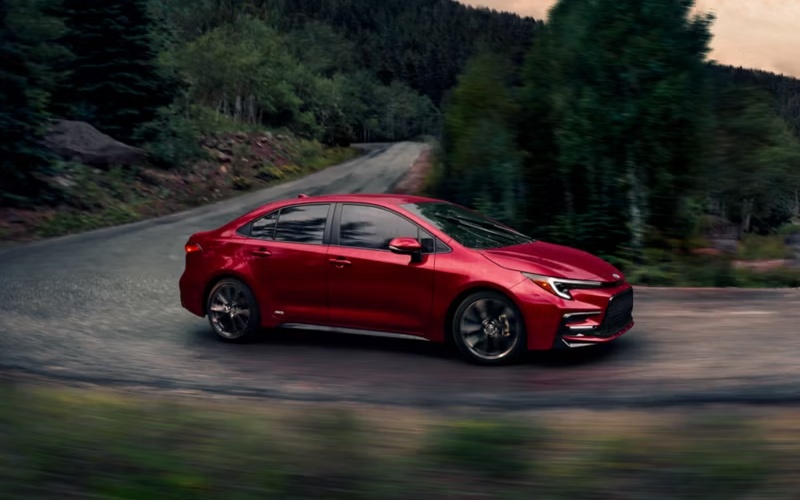
Venice Toyota – Why the 12.3-in Digital Gauge Cluster on the 2026 Toyota Corolla Helps Englewood, FL Drivers Stay Ahead
The 2026 Toyota Corolla is packed with smart technology, but one feature our local shoppers ask about most is the available 12.3-in. Digital Gauge Cluster. It is more than a larger screen—it is a command center that keeps your most important information in sight and your hands focused on the wheel. Around Englewood, FL—whether you are heading down SR 776, navigating Dearborn Street, or easing into evening traffic toward Manasota Key—this display helps reduce distraction and surface the data you actually need.
At a glance, you can prioritize driver-assist status, navigation prompts, audio, or efficiency readouts. The cluster works in tandem with the Toyota Audio Multimedia system to present concise, relevant info. The result is fewer glances to the center screen and more confidence as you filter lane guidance with Lane Tracing Assist or settle into a steady flow with Full-Speed Range Dynamic Radar Cruise Control from Toyota Safety Sense™ 3.0.
Below, we will unpack how the cluster is organized, what it shows, and how to tailor it for your daily routes around Englewood. You will also find tips to pair it with wireless Apple CarPlay® or Android Auto™ so your maps and media updates feel natural instead of noisy.
What the 12.3-in. Digital Gauge Cluster Shows
Corolla’s available 12.3-in. Digital Gauge Cluster can present priority cards, compact widgets, and full-width tiles so you can keep essential information front and center. The display is crisp in bright light and remains readable after sunset. Most drivers set primary tiles for driver-assist status and a secondary tile for directions or media. You can also keep tabs on trip details and efficiency trends without diving through menus.
- Navigation prompts: Turn-by-turn guidance and lane-level prompts for quick decisions.
- Driver-assist status: Clear indicators for Lane Tracing Assist, DRCC set speed, and following distance.
- Audio tile: See song info and quick-skip options without reaching for the center screen.
- Vehicle data: Trip distance, remaining range estimates, and drive mode cues at a glance.
This layout is intentionally simple. When your day takes you from McCall Road to beach parking near Englewood’s shoreline, you want cues that are timely and easy to absorb. The 12.3-in. cluster provides exactly that, without clutter.
How to Customize the Display
Personalizing the cluster is quick. Start parked with the engine on, then use the steering-wheel controls to scroll through layouts and select your preferred arrangement. You can switch priorities—like placing driver assists on the left and audio on the right—or opt for a centered navigation tile. Changes are saved to your profile, so each time you start the Corolla your preferred layout is ready.
- Select your main layout in settings.
- Choose primary and secondary tiles based on your drive—assist status, navigation, audio, or vehicle info.
- Adjust brightness to match ambient light, then save your profile.
One best practice: keep Driver Assist status visible on highway stretches toward I-75 so you can quickly confirm Lane Tracing Assist and DRCC settings at a glance. Around town, prioritize navigation and audio for simple turns and smooth pacing.
Pairing With Toyota Audio Multimedia
The 12.3-in. cluster is even more powerful when paired with the Toyota Audio Multimedia system and wireless smartphone integration. With Apple CarPlay® or Android Auto™ connected, you can view turn prompts on the cluster while the center touchscreen displays the full map. That means your eyes return to the road faster because the next maneuver and lane guidance are already in your line of sight.
- Natural voice: Say “Hey, Toyota” to control audio, calls, and navigation without fumbling for buttons.
- Clean handoff: Glance at the cluster for turns, then use the center screen for map context.
- Media clarity: See track info and adjust volume using steering-mounted controls.
Combined, these systems cut friction across every drive. You are not bouncing between screens for basics; you are maintaining situational awareness while your tech stays in step.
Frequently Asked Questions:
Can I switch between cluster layouts while driving?
You can toggle certain views using steering-wheel controls, but for safety we recommend setting your preferred layout while parked. The system is designed to minimize distraction and keep the most relevant information prominent during your drive.
Does the cluster still show important alerts if I am in an audio or navigation view?
Yes. Safety and vehicle alerts have priority and will surface as needed. Driver-assist indicators and warnings remain visible or will interrupt a tile to ensure you see critical information right away.
How does the Digital Gauge Cluster help on longer trips?
On longer stretches—like a weekend run from Englewood toward the interstate—you can keep DRCC details, following distance, and turn prompts visible at all times. That reduces scanning between screens and helps you maintain smooth, predictable pacing.
Will the cluster work seamlessly with both Apple CarPlay® and Android Auto™?
Yes. Wireless Apple CarPlay® and Android Auto™ are designed to hand off prompts and media info cleanly to the cluster. You can also use the center screen for deeper controls and map views while the cluster displays concise next steps.
What if multiple drivers share the Corolla?
Create individual driver profiles. Each profile can save preferred cluster layouts, brightness settings, and multimedia preferences. Switching drivers becomes simple, and everyone keeps their favored setup without reconfiguring each time.
Ultimately, the 12.3-in. Digital Gauge Cluster is about clarity and control. It reduces distraction, surfaces your most relevant information, and keeps your eyes up—vital on busy stretches of SR 776, neighborhood lanes near Dearborn Street, and coastal traffic headed toward Englewood Beach. It is the kind of thoughtful technology that feels second nature after a few drives, and it is a standout reason so many local shoppers put the 2026 Corolla on their shortlists.
At Venice Toyota, we can walk you through the display’s customization during a test drive and show you how it pairs with the rest of the Corolla’s tech stack. As a dealership serving Punta Gorda, Englewood, and Placida, we help local drivers tailor settings for their daily routes, from quick errands to highway commutes. If you are curious how this display looks and feels on the move, schedule time with our team and see how a smarter layout translates into calmer, more confident driving.
When you are ready to try it yourself, ask us to demonstrate both default and custom layouts, then take a loop that includes a mix of in-town and higher-speed roads. You will immediately notice how the right data, in the right place, changes the way you drive for the better—no gimmicks, just useful design working quietly in the background.
Request more 2026 Toyota Corolla information
Why Full-Time 4WD and Hybrid Torque Make the 2027 Toyota Land Cruiser a Smart Fit around Englewood, FL

Venice Toyota – Why Full-Time 4WD and Hybrid Torque Make the 2027 Toyota Land Cruiser a Smart Fit around Englewood, FL
The Englewood area offers a little of everything—quiet neighborhood streets, busy stretches along SR-776, and quick access to water and wildlife around Lemon Bay. The 2027 Toyota Land Cruiser meets that blend head-on with a standard full-time 4WD system and a hybrid powertrain tuned for immediate torque. For drivers who want a single SUV that can sip coffee on the morning commute and then tow a center console to the ramp in the afternoon, this setup is more than convenient—it’s confidence you can feel.
What full-time 4WD really means for daily driving
On-demand or part-time 4WD systems shine when you remember to switch them on and when conditions stay predictable. Full-time 4WD is different—Land Cruiser automatically applies power to all four wheels, all the time, for consistent traction. That matters in Englewood’s mix of pavement types, painted crosswalks, and sandy shoulders near the water’s edge. With an electronically controlled 2-speed transfer case, you can select the right range for rutted access roads or launch areas, while Crawl Control (CRAWL) helps manage throttle and braking at low speeds. You’re not sacrificing daily civility, either—Drive Modes let you choose Sport, Eco, or Normal to tailor the response to your route.
This all-weather composure becomes second nature. You feel it in smoother pull-aways from stoplights, sure-footed arcs through lane merges, and steady progress when rain or fine sand coats the asphalt. It’s even more reassuring when you’re backing down a ramp or maneuvering a small trailer near the Intracoastal—traction is already working for you, not waiting for you to ask.
i-FORCE MAX hybrid: torque where it counts
Hybrid can mean many things, but in Land Cruiser, it means power you feel right off idle. The i-FORCE MAX setup combines a turbocharged 2.4L 4-cylinder with electric motor assist to produce 326 net combined horsepower and 465 lb.-ft. of torque. Torque is the muscle that gets your boat rolling at the first nudge of the throttle, and that 465 lb.-ft. figure makes the difference when you’re pulling a 6000-lb. max tow up the ramp or merging onto US-41 with confidence.
In normal driving, the hybrid system adds a refined, quiet character. It responds instantly when gaps open and settles down on longer cruises. Around Englewood’s stop-and-go stretches near shopping corridors, that blend of response and smoothness reduces fatigue. Out toward Gasparilla or Manasota Key, it provides the brisk, confident feel that makes longer drives relaxing instead of tiring.
Trail composure that translates to everyday confidence
Off-road hardware isn’t just for the backcountry. Land Cruiser’s available Multi-Terrain Monitor (MTM) and available Multi-Terrain Select (MTS) give you perspective and grip that pay off every day. MTM uses low-speed cameras to show what’s near the tires and front bumper, helping you avoid obstacles in tight parking, on unpaved driveways, or at a busy launch where curbs and posts can hide from view. MTS fine-tunes traction control for surfaces like sand or mud—settings that double as helpful tools when lots and shoulders get slick.
The Stabilizer Disconnect Mechanism (SDM), available on the Land Cruiser trim, improves wheel articulation off-road. On the street, that ability to keep tires planted contributes to composed body control over uneven surfaces—think patched pavement or speed humps around parks and schools. It’s capability that doesn’t sit idle until a road trip; it elevates daily confidence, too.
Practical power: onboard electricity and visibility
With a 2400W AC inverter, Land Cruiser brings jobsite, tailgate, or campsite utility into your daily routine. Charge power tools, run a cooler, or keep camera gear powered for early-morning shoots. Add the Land Cruiser trim’s Rigid Industries® color-selectable LED fog lights, and you gain adaptable visibility—switch between crisp white and high-contrast yellow light to match conditions around coastal haze or after sunset.
These are small touches until you use them. Then they become why you reach for this SUV’s keys—because it always seems ready, whether you’re loading paddleboards before sunrise or running a late grocery pickup.
Inside the cabin: comfort that holds up to real life
Land Cruiser’s interior prioritizes comfort and control without fuss. Available premium leather-trimmed seating and a heated steering wheel offer a welcoming feel after long days on the water, while Qi wireless charging and USB-C ports keep phones and tablets topped up. The 60/40 split rear seat quickly adapts to weekends—rods, tackle, coolers, and a friend or two—without a puzzle to solve. Available heated side mirrors add a simple but meaningful layer of convenience for clearing condensation quickly on humid mornings.
- Seating Flexibility: 60/40 split rear seat for fast cargo reconfigurations
- Device Power: Qi wireless charging and USB-C ports for easy charging
- Everyday Warmth: Heated front seats and heated steering wheel
- Clearer Mornings: Available heated side mirrors to shed moisture
These conveniences don’t replace capability—they complement it. The result is an SUV that’s just as rewarding after the ride as it is on the way there.
Frequently Asked Questions:
Is full-time 4WD complicated to use around town?
No. Land Cruiser’s full-time 4WD runs automatically and transparently. You don’t have to engage or disengage anything for normal driving; it simply sends power to all four wheels for consistent traction. When you need specific gearing for low-speed work—like uneven trails or a ramp—you can select low range through the 2-speed transfer case.
How much can the 2027 Land Cruiser tow?
Land Cruiser is rated to tow up to 6000 lbs. That’s a strong match for many bay boats, personal watercraft trailers, and utility trailers common around Englewood and nearby waterways.
What off-road tools help with local sand or wet shoulders?
Available Multi-Terrain Select (MTS) adjusts traction control for surfaces like sand or mud, while Crawl Control (CRAWL) manages throttle and braking at low speeds. The available Multi-Terrain Monitor (MTM) helps you see around the front tires and bumper to avoid hidden obstacles.
Do I need special maintenance because it’s a hybrid?
Land Cruiser’s hybrid components are engineered to integrate with Toyota’s established service schedule. Routine maintenance remains straightforward—oil changes, filters, tire rotations—and your service team can advise on hybrid checks at recommended intervals.
When you’re weighing capability, comfort, and long-term confidence for Englewood driving, full-time 4WD and hybrid torque make the 2027 Toyota Land Cruiser an especially strong match. It’s composed in traffic, steady on a slick ramp, and calm on long stretches out to Gulf beaches—all while delivering the power you need for towing and weekend plans. For drivers seeking one vehicle that covers more of life’s list, this one checks the right boxes.
We’re proud to support local drivers—serving Punta Gorda, Englewood, and Placida—with guidance on towing, off-road features, and everyday tech. When you’re ready to experience how full-time 4WD and hybrid torque feel on your roads, we’ll help you explore configurations, set up a realistic test drive, and get you comfortable with the features that matter most. Venice Toyota stands ready with answers, hands-on demos, and an ownership experience built around you.
Request more 2027 Toyota Land Cruiser information
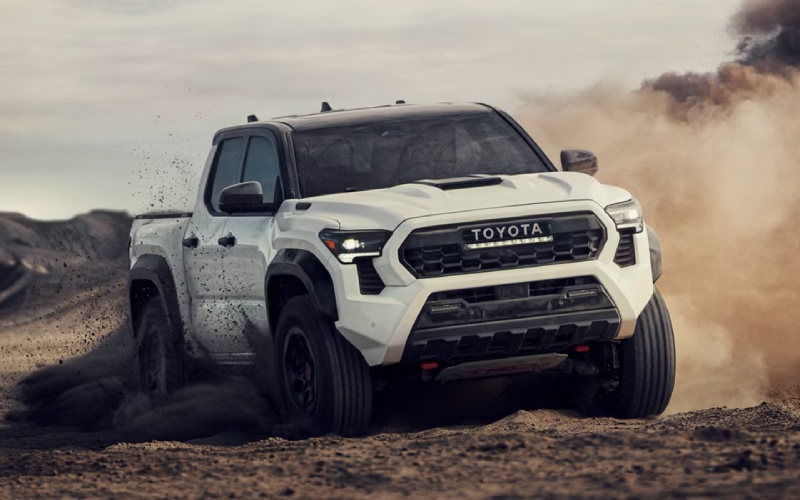
Venice Toyota – Do I need 4WD on a 2026 Toyota Tacoma for boat ramps near Bradenton, FL?
Choosing between 2WD and 4WD on a 2026 Toyota Tacoma is not just a spec-sheet decision for shoppers near Bradenton, FL. If your weekends include launching at Coquina Boat Ramp, threading sand-and-shell parking near the Palma Sola Causeway, or backing a trailer down a damp concrete ramp on the Manatee River, the right drivetrain can make every trip smoother. At Venice Toyota, we help drivers match Tacoma capability to real Gulf Coast routines, so you feel confident from US 41 to Anna Maria Island.
Why this question matters around Bradenton
Bradenton’s daily driving is mostly paved and predictable, yet the area adds two traction curveballs that catch many shoppers by surprise. First, busy boat ramps can be slick from algae and tide wash, and ramp lanes often accumulate fine sand. Second, shoulder parking at popular launches and trailheads can be soft and rutted. The 2026 Tacoma offers both 2WD and 4WD configurations, along with advanced traction tools, so the best answer depends on how often you encounter those conditions and how heavy your trailer or gear load is.
Think about your weekdays, too. If your routine includes I-75, Cortez Road, and Lakewood Ranch errands with occasional hauls to job sites, balance matters. The Tacoma’s available i-FORCE MAX hybrid powertrain delivers up to 326 horsepower and 465 lb.-ft. of torque, so either drivetrain feels strong. The key difference is how reliably that power reaches the ground when surfaces get wet, sandy, or uneven.
What 4WD changes on the 2026 Tacoma
With 4WD, Tacoma can send torque to both axles to improve traction as conditions vary. Off-road-oriented grades add purpose-built suspension tuning and trail features designed for low-speed control. Available Crawl Control (CRAWL), Stabilizer Disconnect Mechanism (SDM), and a multi-link rear suspension help the truck maintain contact and composure over uneven surfaces. While you may never crawl a boulder garden in Robinson Preserve, that same control can translate to steady, predictable moves when a ramp is slick, or the shoulder is soft.
Visibility and information help, too. The available 3D Multi-Terrain Monitor (MTM) gives front, rear, and side views—useful when backing a trailer or checking for ramp edges. The available 12.3-In. Digital Gauge Cluster can display off-road and towing data at a glance, and the available 14-In. Audio Multimedia Display supports features like SiriusXM® and wireless Apple CarPlay® compatibility, so your day stays connected as you move from city streets to the water.
When 2WD is all you need
Plenty of Bradenton shoppers choose 2WD and never look back. Modern traction management, smart tires, and driver-assist systems cover a lot of ground for light-duty use. If your trailer is modest and you mostly stick to well-maintained ramps, 2WD can deliver the comfortable, efficient, easygoing experience you want without the added complexity of 4WD.
- Primary use: Daily commuting on I-75, US 41, and city streets with no soft-surface detours.
- Trailering habits: Occasional small personal watercraft or lightweight utility trailer on clean, well-graded ramps.
- Parking surfaces: Paved marina lots and firm gravel rather than sand or shell shoulders.
- Ride preference: Street-focused feel, such as what you get with TRD Sport’s tuning.
- Feature priorities: Cabin tech, Toyota Safety Sense™ 3.0, and easy maneuvering over all-terrain extras.
If that sounds like your week, a 2WD Tacoma—especially in SR, SR5, or TRD Sport—can be an excellent fit. You still benefit from the truck’s strong i-FORCE turbocharged performance and available 8-Speed Automatic Transmission, along with everyday utility and comfort.
When 4WD is the smarter pick
If your plans include busier ramps, heavier boats, or unpaved access points, 4WD adds confidence you can feel. Think about the down-slope traction needed to ease a trailer onto a slick surface, then the controlled pull back up the incline. Add in the occasional sand patch at Palma Sola Causeway or a soggy corner near Emerson Point Preserve, and 4WD becomes more than a convenience—it is a capability cushion that protects your day.
- Boat launching: Frequent use of ramps where algae, tide wash, or sand make surfaces slick.
- Heavier loads: Tandem-axle trailers or taller center-console boats that shift tongue weight on inclines.
- Access roads: Soft shoulders, shell lots, or unpaved marina approaches that rut after rain.
- Weekend exploring: Trailheads or primitive campsites where grip and ground clearance matter.
- All-weather stability: Extra traction margin for sudden downpours and standing water.
- Resale peace of mind: Broader demand for 4WD trucks in coastal, recreation-heavy markets.
For shoppers who want that capability baked in, Tacoma TRD Off-Road, TRD Pro, and Trailhunter build on 4WD with hardware tuned for traction and control. You will find components like Bilstein® monotube shocks with piggyback reservoirs, 2.5-in. FOX® Internal Bypass QS3® shocks, and Old Man Emu® position-sensitive shocks on the respective grades—each engineered to keep the truck composed when the surface is not.
Tacoma features that support towing and traction
Beyond 2WD vs. 4WD, Tacoma’s towing and camera tech simplify tricky maneuvers. Available Advanced Towing Technology includes Trailer Backup Guide with Straight Path Assist to keep your trailer tracking where you intend, an integrated brake controller for more precise trailer braking, and Blind Spot Monitor (BSM) that can extend detection while towing. Paired with the 3D MTM and those clear truck-mirror sightlines, it is a confidence multiplier on crowded ramps.
If you opt for the available i-FORCE MAX hybrid powertrain, the instant electric torque helps you start smoothly on inclines and maintain a stable pull at low speeds. The available 2400W power supply can even support tools for trailer maintenance or accessories at the dock, turning your truck into a rolling power hub.
How to choose your Tacoma drivetrain with us
We recommend a back-to-back drive to feel the difference. Our team can map a route that mirrors Bradenton life, so your decision comes from experience, not guesswork.
- Start on pavement: Compare steering feel, ride quality, and visibility as you merge and brake.
- Add a ramp simulation: Practice slow-speed backing with Trailer Backup Guide with Straight Path Assist.
- Test a soft surface: Experience 4WD engagement and low-speed control on loose material.
- Explore tech displays: Toggle the 12.3-In. Digital Gauge Cluster and 14-In. Audio Multimedia Display.
- Review accessories: Consider bed storage, tie-downs, and all-weather mats that fit your routine.
We are a short, straightforward drive from Bradenton, and our Tacoma inventory includes 2WD and 4WD options across XtraCab and Double Cab configurations. Bring your questions—and if you have a specific boat or trailer in mind, bring those details, too. We will help you dial in the right cab, bed, and drivetrain mix.
Frequently Asked Questions:
Will 4WD help me launch at Coquina Boat Ramp or on the Manatee River?
Yes. 4WD provides added traction when you are easing a trailer down a wet, algae-slick surface and pulling back up under load. Pair it with Tacoma’s available Advanced Towing Technology—Trailer Backup Guide with Straight Path Assist, integrated brake controller, and Blind Spot Monitor (BSM) with trailer detection—to make launches and retrievals more controlled and predictable.
Does 4WD affect fuel economy for mostly city driving around Bradenton?
There can be a modest difference, but it is often outweighed by the traction benefits if you regularly visit ramps or soft lots. The good news is that Tacoma’s i-FORCE and available i-FORCE MAX hybrid powertrains are engineered for strong, efficient performance, so you can choose based on capability needs without feeling compromised day to day.
Is Crawl Control (CRAWL) useful for ramps, or is it just for trails?
Crawl Control (CRAWL) is designed for low-speed off-road situations where the surface is highly variable. While it is not a substitute for careful ramp technique, Tacoma’s low-speed control, available 3D Multi-Terrain Monitor, and 4WD traction can help you manage slick transitions more confidently. Always follow ramp rules, secure your load, and engage 4WD appropriately for conditions.
Which Tacoma grades are best if I want 2WD comfort and tech?
SR, SR5, and TRD Sport are popular with 2WD shoppers who want a street-oriented ride and everyday tech like the available 14-In. Audio Multimedia Display, wireless Apple CarPlay® compatibility, and Toyota Safety Sense™ 3.0. You can also opt for the available 6-Speed Manual Transmission on select grades if you prefer a more engaged drive.
What if I split time between ramps and unpaved work sites?
Consider TRD Off-Road or TRD Pro for their 4WD tuning and shock packages, or the Trailhunter if you value extended off-grid capability. The i-FORCE MAX hybrid’s torque delivery is excellent for controlled starts on inclines, and the available 2400W power supply helps run tools or accessories on site.
Whether you end up in a confident, efficient 2WD or a traction-ready 4WD, the 2026 Toyota Tacoma backs you with serious brains and brawn: an available 3D Multi-Terrain Monitor for clarity, a customizable 12.3-In. Digital Gauge Cluster for data at a glance, and a suite of Toyota Safety Sense™ 3.0 features for added peace of mind. Visit us at Venice Toyota and let our team set up a route that reflects Bradenton living—then choose the Tacoma that will make every launch, commute, and weekend plan feel easy.
Request more 2026 Toyota Tacoma information
Your Go-To Toyota Dealer near North Port, FL for Sales, Financing, Trade-Ins, and Service
Venice Toyota – Your Go-To Toyota Dealer near North Port, FL for Sales, Financing, Trade-Ins, and Service
If you live in North Port, you know that a vehicle isn’t just transportation — it’s how you commute up I-75, cruise the Tamiami Trail, visit Warm Mineral Springs, or get the family to weekend activities without missing a beat. At Venice Toyota, we make those everyday drives easier with a friendly, streamlined experience from first browse to final handshake. Our goal is simple: pair you with the right vehicle, make financing straightforward, keep trade-ins hassle-free, and support your ownership with expert service for the long haul.
Convenience matters when life has you moving from Price Boulevard to Toledo Blade, then out to US 41. Our location is an easy hop from North Port, whether you’re stopping in on a lunch break or planning an efficient Saturday test-drive visit. Prefer to begin at home? Start online, then pick up in store — we’ll match your pace and make each step clear and comfortable.
Inventory Variety That Fits Life in North Port
Your needs change by the day — morning commutes, school drop-offs, grocery runs, beach gear, or a quick road trip to see friends across Sarasota County. Our inventory spans popular Toyota sedans, crossovers, SUVs, trucks, and electrified options to match those routines. Whether you’re drawn to fuel-friendly commuting, family-ready space, or weekend-ready capability, you’ll find choices built with trusted Toyota engineering, smart connectivity like Apple CarPlay and Android Auto, and confidence-inspiring Toyota Safety Sense features.
Browse online to preview availability, request walkaround videos, compare options, and bookmark favorites. When you’re ready, set up a time to see them in person. We’ll have keys ready, walk you through features you care about, and give you room to make a confident decision without pressure.
Financing and Trade-Ins Made Straightforward
Financing should bring clarity — not complexity. Our finance team works with a broad network of reputable lenders to help you choose a path that fits your goals, whether that’s a traditional loan or a flexible lease. You can get a head start from home with a quick pre-approval and then finalize details on-site in minutes. We keep the process transparent, answering your questions in plain language so you always know what comes next.
Have a vehicle to trade? Bring it along. We provide a streamlined appraisal process that considers real market data and your vehicle’s condition, with a clear written value you can apply toward your next vehicle. We’ll handle the title work and payoff coordination, so you can focus on your upgrade — not on paperwork.
Confidence for Everyday Gulf Coast Driving
Local driving can include anything from I-75 merges to stop-and-go along US 41 and neighborhood streets around Heron Creek, Gran Paradiso, or nearby communities. That’s why Toyota driver-assist systems such as Toyota Safety Sense — including features like Dynamic Radar Cruise Control, Lane Tracing Assist, and the Pre-Collision System with Pedestrian Detection — are such useful companions. Add in smart tech like Apple CarPlay and Android Auto for easy maps and playlists, and your day just got simpler.
We also understand that life doesn’t stay in one ZIP code. Our team is proud to be serving Port Charlotte, Punta Gorda, and Englewood, and we welcome shoppers who split time between work, school, and waterfront weekends around Charlotte Harbor and the Myakka River. Wherever your route takes you, we’re ready to help you choose a setup that meets your daily rhythm.
What Sets Our Team Apart
We’ve built our approach around the questions North Port shoppers ask most — and the support that keeps ownership stress-free after the sale. Here’s what you can expect every time you visit:
- Local expertise: We listen first and recommend options that fit real driving in and around North Port, from I-75 commutes to condo parking constraints.
- Seamless shopping: Browse online, request a virtual walkaround, then transition in-store for a focused test drive — all without repeating steps.
- Transparent trade-ins: Bring your current vehicle for a clear, data-informed appraisal and a written value you can use immediately.
- Flexible financing: Multiple lender options, guidance on loan vs. lease, and helpful tools like online pre-approval and payment estimating.
- Certified service: Factory-trained technicians, modern diagnostics, and attention to detail that protects long-term value.
- Genuine Toyota Parts: Components engineered for ideal fit and performance — the right way to maintain vehicle integrity.
- Time-saving convenience: Express services for routine maintenance and scheduling that work around busy North Port calendars.
- Community commitment: A helpful, neighborly approach that puts relationships first — before, during, and after you buy.
Ownership support is where peace of mind really grows. ToyotaCare helps you start strong with no-cost maintenance and 24-hour roadside assistance for the covered period, and our Express Maintenance keeps essentials like oil changes, tire rotations, and inspections on schedule without slowing your day. At Venice Toyota, our certified technicians and Genuine Toyota Parts keep your Toyota performing as designed — so you can drive confidently, mile after mile.
Getting Started Is Simple
When you’re ready to take the next step, we’ll meet you wherever you are in the process. Here’s an easy roadmap from first search to first drive:
- Explore our inventory online and save vehicles that fit your needs.
- Request a virtual walkaround or schedule an on-site test drive.
- Complete a quick pre-approval to streamline your visit.
- Bring your trade-in for a same-day appraisal and apply its value.
Frequently Asked Questions:
Can I schedule a same-day test drive if I’m coming from North Port?
Yes — walk-ins are welcome, and scheduling ahead helps us prepare vehicles you’re most interested in so you can compare them back to back.
Do you handle trade-ins with an active loan payoff?
Absolutely. Our team will coordinate payoff details with your lender, manage title work, and apply your equity toward your next vehicle.
What if I’m rebuilding credit — can I still get financing?
Yes. We work with a wide range of lenders and present options in clear terms, so you can choose a path that fits your situation and goals.
How much of the process can I complete online?
You can browse inventory, request videos, start pre-approval, and estimate your trade-in from home. Then visit us to finalize details and take your test drive.
What service support do you provide after I buy?
From ToyotaCare coverage to Express Maintenance and comprehensive diagnostics, our service team helps you stay on schedule with factory-recommended care.
At every step, our goal is to keep things simple and supportive. We explain options in everyday language, anticipate common questions, and tailor recommendations to how you actually drive around North Port — not just what looks good on paper. That means factoring in commute time on I-75, parking realities at home, road-trip cargo needs, and the comfort and technology features that make weekday driving as enjoyable as the weekend.
We also respect your time. Whether you prefer to do most of your research online or in person, we’ll help you move at your ideal pace. Want a quick, focused visit? We’ll line up test drives and have your trade-in evaluated while you’re out. Need an in-depth feature review? We’ll walk you through Toyota Safety Sense, infotainment options, and the ownership benefits that matter most to you.
From that first hello to your first service visit — and every mile after — our team is here with answers, tools, and genuine care for your experience. That’s how we’ve earned the trust of so many drivers up and down the Gulf Coast and why North Port shoppers make us their first stop for selection, financing, trade-ins, and long-term maintenance support.
If you’re ready to take the next step, we’re ready to help. Request more information and let us know what you want to accomplish today — compare vehicles, schedule a test drive, get pre-approved, or bring your trade for appraisal. Contact Venice Toyota today to request more information, schedule a test drive, or start your trade-in. We look forward to helping you find the right fit for your North Port drives.
Request more information
How does the 2026 Toyota RAV4 Drive Recorder work for daily driving near Bradenton, FL?
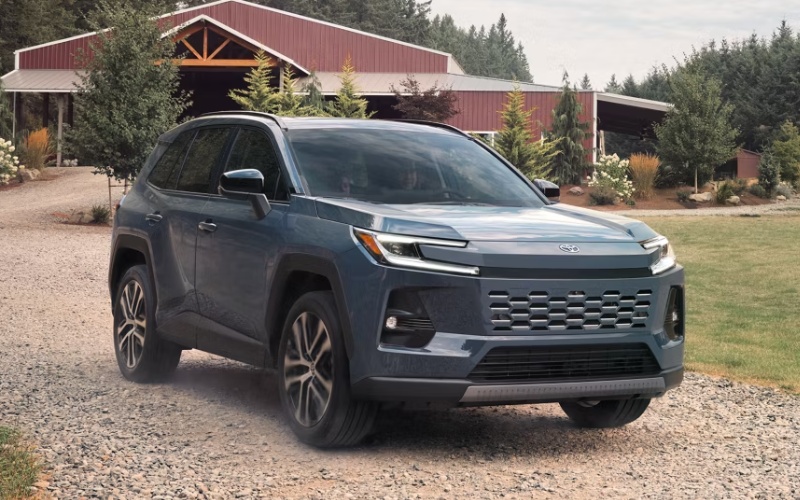
Venice Toyota – How does the 2026 Toyota RAV4 Drive Recorder work for daily driving near Bradenton, FL?
If you drive around Bradenton, you know the routine—tight downtown parking near Old Main Street, weekend crowds at the Riverwalk, and steady stop-and-go on Manatee Avenue, Cortez Road, and I-75. The 2026 Toyota RAV4 adds a smart layer of confidence to that everyday mix with Drive Recorder, an integrated feature that can capture video of your drive and help preserve important moments when you need documentation. At Venice Toyota, we see shoppers ask how it actually works in the real world, so we put together a practical guide on what Drive Recorder does, where it helps most around Bradenton, and how to get the most from it in your new RAV4.
What the RAV4 Drive Recorder is—and why it matters locally
Drive Recorder is built into the 2026 Toyota RAV4’s advanced technology suite and works with the vehicle’s onboard systems to record video clips that you can view and save. It is designed to be convenient—you do not have to install a separate dash camera, manage extra cords, or worry about blocking your view. For Bradenton-area drivers who split time between school pickups, barrier-island outings, and Lakewood Ranch commutes, having a recording of what happened in front of your vehicle can make a frustrating day much easier to navigate.
Think about scenarios like a minor parking-lot scrape at the Riverwalk or an abrupt stop on US-41. When a moment becomes unclear, having a video helps you recount the facts with confidence. Because Drive Recorder lives inside your 2026 RAV4, it is ready whenever you are—whether you are heading down the DeSoto Bridge or navigating a tight spot near Bradenton Beach.
How Drive Recorder works day to day
From the driver’s seat, you access Drive Recorder through the available 12.9-in. Toyota Audio Multimedia touchscreen. The interface is designed to feel familiar, so adjusting settings and reviewing clips is straightforward. You can start a manual recording when something ahead looks unpredictable or rely on the system’s ability to preserve footage around significant events. Once saved, clips can be reviewed on the screen, and you can store important files for future reference. For exact menu paths and storage options, we recommend reviewing your RAV4 Owner’s Manual or stopping by our showroom for a quick walkthrough.
Because the feature is integrated into the RAV4, it works alongside the rest of your technology without adding clutter. The standard 12.3-in. digital gauge cluster keeps your crucial drive data in view, and the available 12.9-in. multimedia display puts the Drive Recorder controls within easy reach. The combination feels seamless, which means you are more likely to use the tool when you need it most.
Set-up tips we recommend at Venice Toyota
When you take delivery, our team can help you personalize Drive Recorder so it aligns with your daily routes in and around Bradenton. We will walk you through the main settings, show you how to initiate and save a clip, and help you understand how to review footage. It takes just a few minutes and builds confidence quickly.
- Start with the touchscreen and locate Drive Recorder in the settings or apps menu.
- Familiarize yourself with the option to start and save a clip while you are safely parked.
- Practice reviewing a saved clip on the 12.9-in. display so you know what to expect.
- Ask our team to demonstrate how Drive Recorder works alongside Toyota Safety Sense™ 4.0 (TSS 4.0) so you understand each feature’s role.
These simple steps make Drive Recorder feel second nature—useful whether you are navigating IMG Academy traffic or making a run to Ellenton Premium Outlets.
How Drive Recorder complements your RAV4 safety and convenience tech
Drive Recorder is not a driver-assist system—it documents what is happening; it does not control the vehicle. Your active confidence still comes from Toyota Safety Sense™ 4.0 (TSS 4.0). That suite is designed to support you with features that can help with awareness and decision-making. When you add Drive Recorder to that foundation, you get both real-time assistance from TSS 4.0 and the peace of mind of having video clips you can review later.
The 2026 RAV4 also brings other helpful tools for our area. Available Traffic Jam Assist can help in stop-and-go situations on controlled-access highways at low speeds, and available Advanced Park can make backing into a tight space near the farmers market feel easy. Together with the clear visuals of the 12.9-in. Toyota Audio Multimedia system and the standard 12.3-in. digital gauge cluster, your technology works in harmony to simplify daily driving in Sarasota-Manatee.
Beyond documentation, the rest of the RAV4 package still shines for local needs. With up to 37.8 cu. ft. of cargo capacity, there is room for beach chairs, a soft cooler, and a pop-up tent. Available AWD adds confidence for unpaved trailheads, and with up to 3500 lbs. of towing capacity, you can bring along a small trailer for weekend projects. If you choose the Woodland grade, integrated Rigid Industries® LED fog lights are there to help enhance visibility when conditions shift.
Everyday best practices around Bradenton
Like any tool, Drive Recorder delivers the most value when you use it consistently and responsibly. We recommend making it part of your start-up routine, so you never wonder whether it is ready. Keep exterior camera areas clean for the clearest image—salt spray and road grime can build up faster when you spend time near the coast. And as always, follow local regulations and respect privacy when and where you review or share any footage.
If you are unsure about any setting or want us to tailor a quick tutorial to your commute, our team is happy to help. We can also review your RAV4’s Owner’s Manual with you and make sure your vehicle’s software is up to date during routine service visits. With ToyotaCare and Toyota Express Maintenance at our Venice service center, it is easy to keep your technology and your vehicle in sync.
- Drive Recorder adds clarity after a parking-lot incident near the Riverwalk.
- Manual recording is useful if traffic around the DeSoto Bridge turns unpredictable.
- Reviewing clips on the touchscreen is convenient before you leave a scene.
- Our team can demonstrate features so you are confident from day one.
The 2026 Toyota RAV4 was designed to feel intuitive—technology that simply works while you focus on the drive. Drive Recorder fits that promise. It is integrated, easy to access, and ready to help you keep your day moving, even when something unexpected happens.
Frequently Asked Questions:
Is Drive Recorder standard on the 2026 Toyota RAV4?
The 2026 RAV4 includes advanced technology features designed to empower your drive, including Drive Recorder. Availability can vary by configuration, so we will confirm equipment on the exact vehicle you choose and demonstrate how it works before you leave our showroom.
How do I view and save a clip from Drive Recorder?
You can access Drive Recorder through the available 12.9-in. Toyota Audio Multimedia display to review recent clips and save the ones you want to keep. For step-by-step menu paths and storage guidance, check your RAV4 Owner’s Manual or stop by Venice Toyota for a quick hands-on walkthrough.
Does Drive Recorder replace a separate dash camera?
For many drivers, yes—having an integrated system that works with your RAV4 is a convenient alternative to add-on cameras. Dedicated aftermarket dash cameras may offer niche features, but the RAV4’s built-in Drive Recorder keeps your cabin uncluttered and your controls in one place.
Will Drive Recorder drain my battery if I use it a lot?
Drive Recorder is designed to operate within the vehicle’s power-management strategy. As with any feature, use it as intended and review your Owner’s Manual for best practices. If you have questions about settings, we can tailor them to your driving routine and answer power-related questions during your delivery or service visits.
Does Drive Recorder affect Toyota Safety Sense™ 4.0 (TSS 4.0)?
No. Drive Recorder documents what is happening; TSS 4.0 provides driver-assist functions. They are complementary but serve different purposes. Always remain attentive and responsible for vehicle operation.
If you would like a live demo, visit us at Venice Toyota—just a short drive from Bradenton down US-41 or I-75. We will show you how Drive Recorder works on the 2026 Toyota RAV4, help you personalize the settings, and get you comfortable with the rest of your technology, from Toyota Safety Sense™ 4.0 (TSS 4.0) to the available 12.9-in. Toyota Audio Multimedia system. Ready to explore trims, including options like Woodland with integrated Rigid Industries® LED fog lights or the well-equipped XSE and Limited? Our team will match you to the right RAV4 and set you up for confident daily driving around Bradenton and beyond.
Request more 2026 Toyota RAV4 information
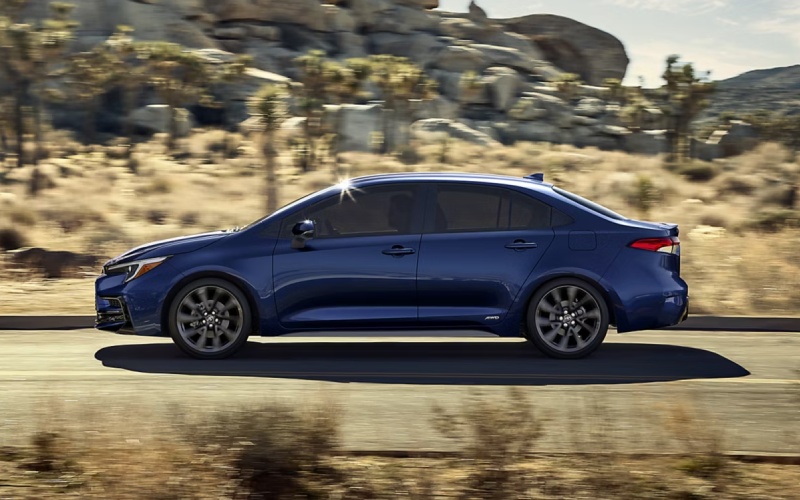
Venice Toyota – Do I Really Need AWD on a 2026 Toyota Corolla Hybrid near Nokomis, FL?
Choosing between Front-Wheel Drive and All-Wheel Drive on a compact sedan is a real-life decision, not a spec-sheet exercise. At Venice Toyota, we talk with Nokomis drivers every day who love the 2026 Toyota Corolla for its smart tech, dependable manners, and standout efficiency. The big question we help answer is simple: does available Electronic On-Demand All-Wheel Drive on Corolla Hybrid make sense for your daily drives around Nokomis, Laurel Road, Albee Road, and the U.S. 41 Tamiami Trail?
Below, we break down how Corolla Hybrid AWD works, where it helps on our local roads, what you trade off by sticking with Front-Wheel Drive, and how to make the right call with a quick, on-the-ground test near Nokomis. We will also touch on comfort, tech, and maintenance, because the drivetrain is only one part of your ownership experience.
How Corolla Hybrid AWD Works, In Plain Terms
Corolla Hybrid’s available Electronic On-Demand All-Wheel Drive is a smart system designed to add traction exactly when you need it. There is no lever or button to fuss with. A dedicated electric drive motor can automatically power the rear wheels to help you pull away confidently or stabilize the car if the front tires start to slip. When the roads are dry and steady, the system prioritizes efficiency by keeping most propulsion up front.
Because the rear wheels are driven by an electric motor, there is no traditional driveshaft running the length of the car. That compact design helps preserve space and smoothness while keeping efficiency at the forefront. You still get the calm, composed feel Corolla is known for, with the confidence boost of on-demand rear-wheel assistance when surfaces get slick.
Just as important, this AWD option pairs with the Corolla Hybrid powertrain — so you are still driving a car built to sip fuel, with up to 50 Combined Est. MPG depends on grade and equipment. That matters whether you commute along I-75, run school pick-ups near Laurel Nokomis, or cruise to Nokomis Beach on weekends.
Where AWD Helps Around Nokomis — And Where FWD Is Perfectly Fine
Nokomis-area driving covers a mix of freshly paved arterials, older neighborhood lanes with shell or sand tracked across them, and frequent stop-and-go along the U.S. 41 corridor. Here is a clear way to think about AWD versus FWD for these conditions.
- Wet roadway launches: AWD helps you pull away smoothly from a stop when pavement is slick after a sudden downpour or light flooding in low spots.
- Uneven or sandy parking areas: At beach lots or shell-covered shoulders near North Jetty Park, the electric rear motor can stabilize low-speed maneuvers.
- Confidence in mixed traction: On painted lines, steel plates, or driveway aprons where one side has less grip, AWD can send help to the rear to keep things moving.
- Predictable, dry commutes: If your driving is mostly straight, dry, and on well-maintained roads, FWD remains a smart, efficient default.
- Highway fuel focus: For long, steady I-75 trips, FWD preserves the simplicity and efficiency many commuters prioritize.
If you rarely drive on sand or shell, do not mind taking a gentler throttle in the rain, and want to keep your Corolla as streamlined as possible, FWD may be exactly right. If you prefer an extra layer of traction for wet days or mixed surfaces while keeping hybrid efficiency, Corolla Hybrid with Electronic On-Demand AWD is an easy yes.
Space, Ride, and Everyday Practicality
AWD or not, Corolla stays practical. You still have comfortable seating for five, a 60/40 split fold-down rear seat with center armrest and two cup holders, and 13.1 cu ft of trunk volume for grocery runs, pickleball gear, or a weekend carry-on and cooler. The compact footprint remains easy to park around downtown Venice and Nokomis, with a tidy 35.6-foot turning circle and a low, confidence-inspiring seating position.
Ground clearance is 5.3 inches — just right for everyday pavement, speed humps, and graded gravel or packed-shell surfaces. If a side street or overflow lot looks deeply rutted or washed out, take it slow or choose a smoother approach. The Corolla’s independent MacPherson strut front suspension keeps the ride composed on patched asphalt, while the Hybrid setup brings a quiet, refined feel in neighborhood driving.
Inside, tech support comes standard. Depending on your grade, you will find features like an available 12.3-in. Digital Gauge Cluster that places key vehicle details front and center, plus Toyota Audio Multimedia with an available 10.5-in. touchscreen, wireless Apple CarPlay® and Android Auto™ compatibility, and an available nine-speaker JBL® Premium Audio system that makes podcasts on the Tamiami Trail sound crisp and clear. The available Smart Key System with Push Button Start and Qi-compatible wireless charging adds simple conveniences you will use every day.
Safety Confidence That Complements Traction
All 2026 Corolla models include Toyota Safety Sense™ 3.0. Systems like Pre-Collision System with Pedestrian Detection, Lane Tracing Assist, Full-Speed Range Dynamic Radar Cruise Control, Lane Departure Alert with Steering Assist, Automatic High Beams, and Road Sign Assist help support your awareness on crowded US 41 or during late-evening returns from the beach. Corolla also offers Blind Spot Monitor (BSM) with Rear Cross-Traffic Alert (RCTA) to help when backing out of angled spaces by Albee Road shops or navigating tight condo lots.
AWD is about traction. Toyota Safety Sense™ 3.0 is about awareness. Together, they create a calm, intuitive driving experience that suits the way we drive in Nokomis — steady, alert, and ready for surprises in traffic.
Want to personalize further? Available features like SofTex®-trimmed heated front seats, premium sport seats with sport fabric inserts, and 18-in. alloy wheels with a graphite-colored finish let you set your vibe, while staying grounded in real-world Corolla usability.
Maintenance and Ownership — What Changes With AWD?
From a day-to-day standpoint, very little changes for you as the owner. Corolla Hybrid’s Electronic On-Demand AWD adds an electric rear motor and related components, but there is no extra button to push or mode to select. On service, every new Toyota includes ToyotaCare, a no-cost maintenance plan that covers normal factory-scheduled maintenance for 2 years or 25,000 miles, whichever comes first, plus 24-hour Roadside Assistance for 2 years and unlimited miles. We handle the schedule — you enjoy the drive.
Tire care is where good habits really pay off. Rotate on schedule and keep pressures set correctly. All-season tires strike a smart balance for local conditions, and our team can help you pick a tread that matches your driving: more highway cruising, more rainy-day confidence, or a stronger bias toward quiet comfort. Because AWD sends torque to all four corners at times, even tire wear is your friend.
On connectivity and convenience, available Connected Services unlock the features many Nokomis drivers expect. Depending on grade and subscription, that can include Remote Connect via the Toyota app, Safety Connect®, Service Connect, Wi-Fi Connect, and Drive Connect with Cloud Navigation and Intelligent Assistant. Our product specialists can walk you through what is equipped on the exact Corolla you choose and how trials and subscriptions work after the initial period.
Try This 10-Minute Local Test to Decide
If you are on the fence, the road will decide quickly. Here is a simple route we recommend from Venice Toyota to compare FWD and AWD Corolla Hybrids back-to-back.
- Start from our store on US 41 Bypass S and head toward Laurel Road for a short stretch of steady-speed cruising.
- Make a few stop-and-go launches from lights to feel initial traction and smoothness.
- Turn onto a neighborhood street with typical dust or shell tracked across the pavement to sense low-speed control.
- Finish with a parking maneuver that includes a tight turn and a gentle uphill apron. Note steering feel, stability, and how confidently each car pulls away.
On dry days, focus on how sure-footed each setup feels from a stop and during quick lane changes. If the skies open up — which can happen any month here — you will instantly feel the AWD system’s benefit. Either way, you will know what is right for your drives near Nokomis.
While you test, explore the cabin tech. Try the Toyota Audio Multimedia interface on the available 10.5-in. touchscreen, pair your phone with wireless Apple CarPlay® or Android Auto™, tap through the available 12.3-in. Digital Gauge Cluster, and listen to your favorite playlist on the available JBL® Premium Audio. That real-world interaction often seals the choice as much as traction itself.
Frequently Asked Questions:
Does AWD change the Corolla Hybrid’s interior or trunk space?
No. You still get seating for five, a flexible 60/40 split fold-down rear seat, and 13.1 cu ft of trunk volume. The AWD system uses a compact rear electric motor, so everyday space remains practical for groceries, beach gear, and daily life.
Is Corolla Hybrid AWD always on?
It is automatic and on-demand. The rear electric motor engages when the system senses front-wheel slip or determines that sending torque rearward will improve stability. When additional traction is not needed, it prioritizes efficiency by focusing power up front.
Will AWD increase my maintenance needs?
Your routine stays simple. ToyotaCare covers normal factory-scheduled maintenance for 2 years or 25,000 miles, whichever comes first, and includes 24-hour Roadside Assistance for 2 years and unlimited miles. We recommend keeping tire rotations and inspections on schedule to support even wear, which benefits any AWD vehicle.
Is the Corolla’s ground clearance suitable for unpaved or shell parking areas?
Yes. With 5.3 inches of ground clearance, the Corolla handles typical graded gravel or packed-shell lots near Nokomis Beach and North Jetty Park. Use a steady throttle and avoid deep ruts or standing water. If the surface looks questionable, choose a cleaner lane or a more even section of the lot.
Ready to explore your options? Visit us at Venice Toyota on US 41 Bypass S and let our team set up a quick, back-to-back drive in a 2026 Corolla Hybrid FWD and a 2026 Corolla Hybrid with Electronic On-Demand AWD. We will help you choose the drivetrain that fits your Nokomis routine — and show you how Corolla’s Toyota Safety Sense™ 3.0, Toyota Audio Multimedia, available 12.3-in. Digital Gauge Cluster, available JBL® Premium Audio, and Blind Spot Monitor (BSM) with Rear Cross-Traffic Alert (RCTA) can make every mile easier.
Request more 2026 Toyota Corolla information
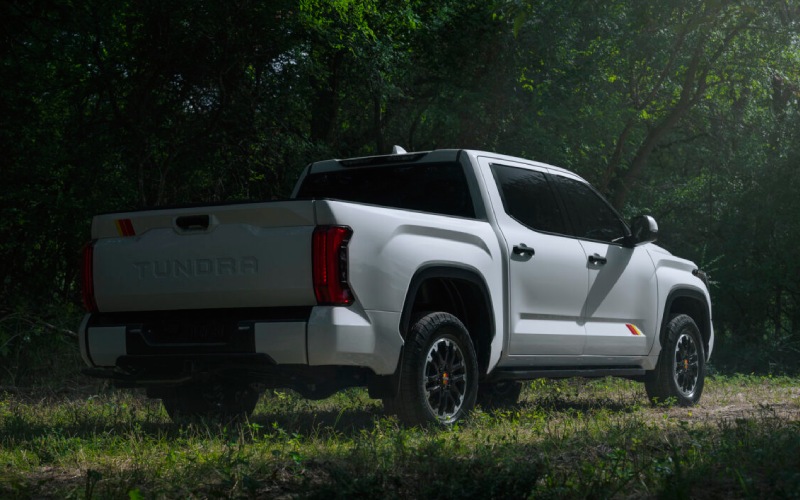
Venice Toyota – 2026 Toyota Tundra or 2026 Ford F-150 – Which full-size truck rides smoother on everyday roads around Port Charlotte, FL?
If you’re comparing ride comfort between two heavy hitters, the 2026 Toyota Tundra and the 2026 Ford F-150 make it a close race—at least on paper. But real-world comfort isn’t just about seat padding. It comes down to rear suspension design, chassis tuning, and how the truck settles after bumps, speed humps, and broken pavement you meet around Tamiami Trail or on your daily hop to the marina near Port Charlotte, FL.
The Tundra’s multi-link rear suspension with coil springs is a major differentiator. Coil-spring setups excel at controlling rebound and maintaining tire contact over uneven surfaces; that translates to less head toss and fewer secondary motions when you’re towing a small boat or cruising across patched asphalt. The F-150’s traditional leaf-spring rear remains durable under heavy payloads, but it tends to communicate more of the road directly into the cabin, especially when the bed is empty. If your daily drive includes frequent dips, bridge seams, and those worn intersections that seem to ripple after every summer storm repair, the Tundra’s composed response is easy to feel.
How suspension design shapes daily comfort
Beyond the spring type, geometry matters. The Tundra’s multi-link layout helps the axle track more precisely through its travel, which supports connected steering and predictable braking while towing. That control reduces the “see-saw” effect you sometimes feel with a trailer in low-speed traffic or when you’re jockeying into a tight driveway.
Ride quality isn’t just about softness; it’s about control. Squat under the throttle, nose-diving under braking, and how quickly the truck calms down after a bump all affect fatigue and confidence. The Tundra’s tuning aims for a calm recovery rather than simply dialing in a cushy initial hit, and that’s exactly what you notice when crossing uneven railroad tracks on the way to a launch.
Noise, vibration, and harshness
Comfort also lives in the background sounds and subtle tremors you may not think about until they’re gone. The Tundra’s frame and body isolation work alongside the multi-link rear to reduce the high-frequency chatter that can make long drives feel longer. While the F-150 isolates well too, the combination of coil springs and Tundra’s chassis tuning tamps down small, rapid impacts that otherwise sneak into the cabin as chatter or seat shake.
Even tire choice plays a role. Aggressive all-terrain patterns look great and help off-road, but they can introduce steady-state hum on concrete freeways. If your daily routes are mostly pavement with occasional sandy pull-outs, consider an all-season or mild A/T with a reinforced sidewall to complement Tundra’s suspension poise.
What about towing comfort?
Plenty of shoppers ask whether a smoother-riding truck can still feel stable with a trailer. The answer is yes—if the suspension geometry and damping are dialed in. The Tundra tows up to 12,000 lbs. when properly equipped, and its available Trailer Backup Guide with Straight Path Assist helps you line up confidently. The F-150 counters with strong maximums and its own trailer technologies, but Tundra’s composure when creeping on a slope or pivoting a trailer in close quarters stands out along the Gulf Coast, where space can be tight and visibility blocked by seawalls and landscaping.
On highways, active driver assists reduce fatigue, but camera systems and clear towing menus reduce mistakes—equally important for confident travel with family and gear. Here again, the Tundra’s user-friendly 14-in. touchscreen and accessible towing pages keep you on top of the situation without digging through submenus.
Quick checklist: how to test ride quality on your drive
Use a route that includes slow-speed turns, a few small bumps, a bridge seam, and a quick stop from moderate speed. Bring a cooler or a couple of toolboxes to simulate light real-world cargo. Toggle tow/haul and drive modes to feel how each truck manages throttle tip-in and downshifts. Most importantly, note how quickly the truck settles after a disturbance—calm recovery is the hallmark of true comfort.
- Bumps and recovery: Does the truck settle quickly after speed humps and patched asphalt?
- Steering feel: Is the wheel steady through mid-corner dips and crowned lanes?
- Brake composure: Under a quick stop, does the rear stay planted without hop?
- Towing manners: Does low-speed trailer maneuvering feel progressive and predictable?
- Cabin calm: Are you hearing or feeling constant small vibrations on concrete?
Technology can help, too. With the Tundra, the available Panoramic View Monitor eases curbside parking and ramp approaches, while clear, bright graphics on the 14-in. multimedia screen reduce distraction. The F-150’s 360-degree camera is strong as well, and Ford’s available BlueCruise can take the edge off long interstate stretches by handling lane-centering on compatible roads. Still, when you return to day-to-day speeds and imperfect pavement, the Tundra’s suspension character is what you’ll appreciate most.
At Venice Toyota, serving North Port, Port Charlotte, and Punta Gorda, our product specialists encourage back-to-back test drives on familiar streets, with your own gear in the bed. That’s the only way to feel how the trucks respond to your routine routes and demands.
Frequently Asked Questions:
Does a coil-spring rear make the Tundra less capable for hauling?
No. Tundra’s multi-link rear is engineered for stability and control under load, and the truck is rated to tow up to 12,000 lbs. when properly equipped. The design emphasizes composure without sacrificing capability.
Will the composite bed really hold up to coastal use?
Yes. Tundra’s aluminum-reinforced composite bed resists dents and corrosion that often come with wet gear, salt spray, and frequent loading—ideal for boat days and contractor duty along the Gulf Coast.
Which truck is quieter on rough pavement?
Both manage wind and powertrain noise well, but the Tundra’s multi-link rear and cabin isolation do an excellent job of reducing high-frequency chatter over patched concrete and expansion joints you encounter daily.
If ride comfort is your top priority without giving up real towing strength, Tundra’s multi-link rear suspension and calm chassis response deliver a smoother, more settled drive. Add intuitive tech—like the available Panoramic View Monitor and large, easy-to-read displays—and you get a truck that takes the stress out of the daily grind while staying ready for work or weekends on the water. Visit Venice Toyota to schedule a drive and bring the gear you actually use—so you can feel the difference for yourself.
Request more 2026 Toyota Tundra information
Venice Toyota – Which compact sedan is smarter for driver-assist tech around Port Charlotte, FL – 2026 Toyota Corolla or 2026 Honda Civic Sedan?
The short answer for Port Charlotte drivers
Shoppers across the Gulf Coast keep asking a straightforward question: which compact sedan offers more driver-assist confidence for daily life—Corolla or Civic? Both nameplates have matured into polished, tech-forward choices. The Civic’s suite is excellent, with camera- and radar-based features under the Honda Sensing® umbrella, plus available Traffic Jam Assist on higher trims. The 2026 Corolla counters with Toyota Safety Sense™ 3.0 standard and an interface that prioritizes visibility and ease of use. That combination—clarity and calm—often matters more than a long list of acronyms when you’re merging near Midway Boulevard, easing into US-41 traffic, or navigating tight lots by the harbor.
What sets Corolla apart is how the core assist features work together, and how naturally you see and manage them. The available 12.3-inch Digital Gauge Cluster displays lane-keeping, radar cruise distance, and road sign data in a crisp, glanceable format. Lane Tracing Assist, Full-Speed Range Dynamic Radar Cruise Control, and Automatic High Beams are standard. Proactive Driving Assist can even offer gentle braking and steering support in some everyday scenarios. Civic’s approach is strong too, and its hybrid trims bring in features like deceleration selectors to tailor regenerative feel. But if your top priority is situational awareness at a glance, Corolla’s larger optional instrumentation and consistent, intuitive menu structure via the Toyota Audio Multimedia system stand out.
How this tech actually helps on the Gulf Coast
Driver-assist systems are most valuable when they trim away the minor hassles that add up during a Port Charlotte commute. Corolla’s Full-Speed Range Dynamic Radar Cruise Control can reduce fatigue on I-75 by managing following distance smoothly, while Lane Tracing Assist adds gentle centering cues when lane markers are clear. Automatic High Beams help on dark, rain-slick corridors, and Road Sign Assist can reinforce a last-second speed change with on-screen reminders. If you step up to a Hybrid with available Electronic On-Demand All-Wheel Drive, you also get the benefit of extra traction during those surprise downpours—confidence you’ll notice at stoplights where paint stripes and standing water can compromise front-drive grip.
Honda Sensing® offers a highly capable baseline that includes adaptive cruise and lane-keeping. On upper trims, the Civic’s Google built-in can place mapping and voice assistance at the center of your experience. The difference we hear about from local drivers is tactile: Corolla feels calm underfoot, less prone to darting corrections, and reads its surroundings in a way that feels predictable. That predictability, paired with visual clarity from the available 12.3-inch cluster and 10.5-inch touchscreen, is why many commuters and new drivers alike gravitate toward Toyota’s tuning philosophy.
Feature-by-feature considerations
Beyond the core safety suites, everyday tech touches move the needle. Corolla’s wireless Apple CarPlay® and Android Auto™ are widely available across grades and pair well with an optional JBL® Premium Audio system. The Civic’s Bose system on top trims is excellent, too. Corolla’s cloud-based navigation via Drive Connect and “Hey, Toyota” Intelligent Assistant make it simple to request a route or find a nearby coffee stop without breaking focus. If you dislike scrolling through submenus, the Corolla’s straightforward tile layout and clear status bars minimize taps, which we’ve found helpful during multi-stop errands from Charlotte Harbor to Kings Highway.
- At-a-glance status: Corolla’s available 12.3-inch cluster keeps assist icons large and legible, reducing the “what’s on right now?” guesswork.
- Assist feel and tuning: Corolla’s Lane Tracing Assist and radar cruise blend gently into your inputs; you remain in control without sudden nudges.
- Confidence in the rain: Corolla Hybrid’s available Electronic On-Demand AWD adds traction to match driver-assist capability, a pairing Civic lacks.
Frequently Asked Questions:
Do both sedans include a standard safety suite?
Yes. Corolla includes Toyota Safety Sense™ 3.0 standard, and Civic includes Honda Sensing® standard. Each suite bundles forward-collision mitigation, lane departure warning/assist, and adaptive cruise control.
Can either sedan steer and brake for me in traffic?
Both can provide supportive steering and braking inputs under specific conditions. Corolla’s Lane Tracing Assist works with Full-Speed Range Dynamic Radar Cruise Control to help with centering and spacing, and Civic offers Traffic Jam Assist on higher trims. These are assist features—you remain responsible for control.
Which model makes it easier to see what’s active?
Corolla’s available 12.3-inch Digital Gauge Cluster is larger than Civic’s 10.2-inch unit, which means assist status icons and lane markers are big, bright, and easy to parse at a glance.
Does either sedan offer all-wheel drive with a hybrid?
Corolla Hybrid offers available Electronic On-Demand All-Wheel Drive that can automatically power the rear wheels for added traction. Civic Hybrid is front-wheel drive only.
Local drivers also ask about ownership support and ongoing updates. Toyota integrates over-the-air capability for certain multimedia features, and with ToyotaCare included on new vehicles, basic scheduled maintenance is simplified for the early miles. Honda’s ownership tools are strong as well, with app-based features and connected services on the Civic. If you want a sedan that marries high-visibility driver-assist information with calm, consistent responses, Corolla sets a high bar for Port Charlotte commuters and weekend wanderers alike.
To compare trims, sit in both displays, and test the assist feel on familiar streets, plan a short route that includes Highway 41 speeds, a few lane changes, and a stretch of slower surface streets. The real test of driver-assist tech is how well it blends into your habits, not how long the spec sheet is. One test drive is often enough to feel the differences clearly.
If you’re ready to try these systems side by side, our team at Venice Toyota can walk you through setup and settings in minutes. We’re serving North Port, Port Charlotte, and Punta Gorda with knowledgeable product specialists who take the time to fit the tech to your comfort—not the other way around.
Request more 2026 Toyota Corolla information
Which compact SUV is more versatile for Port Charlotte, FL drivers — 2026 Toyota RAV4 or 2026 Mazda CX-5?
Venice Toyota – Which compact SUV is more versatile for Port Charlotte, FL drivers — 2026 Toyota RAV4 or 2026 Mazda CX-5?
When Port Charlotte families ask which compact SUV carries more day-to-day versatility, the conversation naturally centers on two standouts: the redesigned 2026 Toyota RAV4 and the all-new 2026 Mazda CX-5. Both arrive with fresh styling and modern tech, but the way they approach performance, safety, and usability feels very different. If you spend your weeks commuting along US 41 or I-75 and your weekends moving between parks, boat ramps, and beach parking, these differences matter.
The RAV4 makes its versatility felt right away with multiple electrified options: a Hybrid and a Plug-in Hybrid (PHEV). That means smooth, quiet takeoffs, strong passing, and a relaxed driving character that meshes well with stop-and-go pockets and quick merges. The CX-5, by contrast, launches with a refined 2.5-liter gas engine and a 6-speed automatic—familiar and polished—but saves its hybrid introduction for a later model year. If you’re prioritizing electrified confidence today, the RAV4 is ready now.
Everyday ease: cabin tech that just works
Inside, the 2026 Toyota RAV4 keeps information clear with a standard 12.3-in. digital gauge cluster and offers an available 12.9-in. Toyota Audio Multimedia touchscreen with crisp visuals and natural voice commands. Available JBL® Premium Audio and Dual Qi-compatible wireless charging complete a cabin that feels cohesive for drivers and passengers alike. The CX-5 counters with a new, larger 15.6-inch touchscreen and Google built-in, which adds helpful Google Maps integration and app support. If you favor a familiar smartphone-like interface on the main screen, Mazda’s move is compelling; if you want a thoroughly integrated Toyota experience with convenient connected services and a driver-focused layout, RAV4’s system feels purpose-built.
Safety and convenience for busy lots and tight streets
Parking and slow-traffic tech can make the difference between a relaxed afternoon and a stressful one. RAV4 brings Toyota Safety Sense™ 4.0 (TSS 4.0) standard and offers available Advanced Park—hands-free parallel and perpendicular parking made simple—and an available integrated Drive Recorder that can function like a factory dash cam. Those features are designed around the realities of coastal living, where popular spots fill quickly, and tight angles are common. CX-5 adds to Mazda’s strong safety story with updated i-Activsense driver assists and standard AWD for stable launches in wet conditions. Still, if you’re specifically seeking hands-free parking and a built-in drive recorder, RAV4 stands alone.
Here’s how many Port Charlotte, FL drivers think through the decision:
- Powertrain flexibility: RAV4 offers Hybrid and PHEV now; CX-5 begins with a single 2.5-liter gas engine for 2026.
- Parking tech and peace of mind: RAV4’s available Advanced Park and Drive Recorder addresses tight marina and beach parking challenges directly.
- Cabin experience: RAV4 focuses on integrated Toyota controls and displays; CX-5 emphasizes Google built-in and a large touchscreen hub.
Capability for your weekend plans
For light trail use or sandy, uneven lots, the RAV4 Woodland grade adds factory all-terrain tires, raised roof rails with cross bars, and integrated Rigid Industries® LED fog lights. It’s purpose-built hardware that helps when pull-in spaces along waterways get soft or rutted. Properly equipped, the RAV4 can tow up to 3500 pounds, which covers small trailers or a pair of personal watercraft. The CX-5 brings standard AWD for consistent grip and a longer wheelbase for a planted ride, but it doesn’t match the RAV4’s factory all-terrain emphasis or its upper-end towing capability in 2026.
What about cargo and comfort?
RAV4’s cargo area is thoughtfully shaped, offering up to 37.8 cu. ft. behind the second row—plenty for coolers, chairs, and umbrellas for a day at Port Charlotte Beach Park. Available SofTex®-trimmed seats with ventilation help on warm afternoons, and the available panoramic glass roof brightens the cabin nicely. CX-5 answers with increased rear leg and headroom this year, and also offers an available panoramic sunroof. Both are comfortable, but RAV4’s load floor and accessories make it just a bit easier to live with when your week involves a mix of kid shuttles, grocery runs, and weekend gear.
How to test-drive smarter in Port Charlotte, FL
- Bring your routine: Pack the stroller, cooler, or beach cart you use most and confirm how easily it fits.
- Try the tech: Use voice commands, navigate a familiar route, and practice a tight parking maneuver.
- Consider weekends: If fishing, paddling, or towing is in the plan, focus on RAV4’s Woodland grade and towing setup.
Frequently Asked Questions:
Does the 2026 Toyota RAV4 offer a hybrid and PHEV option, while the 2026 Mazda CX-5 does not?
Yes. RAV4 is available as a Hybrid and a Plug-in Hybrid (PHEV). Mazda has announced that a hybrid is coming to the CX-5 in a later model year, not at launch for 2026.
Is hands-free parking available on either SUV?
RAV4 offers available Advanced Park for hands-free parallel and perpendicular parking. The CX-5 does not offer a comparable hands-free system for 2026.
Which SUV is better for soft-surface lots or light trails?
RAV4’s Woodland grade brings factory all-terrain tires, rugged roof rails, and integrated Rigid Industries® LED fog lights—hardware advantages for soft or uneven surfaces. CX-5 emphasizes standard AWD and a refined on-road feel.
How do the infotainment systems differ?
RAV4 centers on Toyota Audio Multimedia with an available 12.9-in. touchscreen and a standard 12.3-in. digital gauge cluster. CX-5 uses a large 15.6-inch touchscreen with Google built in for Maps and select apps.
Ultimately, the 2026 Toyota RAV4 delivers more ways to tailor performance and convenience to your life around Port Charlotte, from electrified powertrains to advanced parking tools and factory off-road-leaning hardware. If you’re ready to compare these features side by side, Venice Toyota is here to help—serving North Port, Port Charlotte, and Punta Gorda with vehicles, test-drives, and expert guidance shaped around your day-to-day needs.
Thinking ahead to your next few years of driving and weekend plans is the best way to choose confidently. For many Port Charlotte, FL shoppers, that points to the RAV4’s ready-now electrification, playful but purposeful trims, and tech that streamlines every mile.
Request more 2026 Toyota RAV4 information
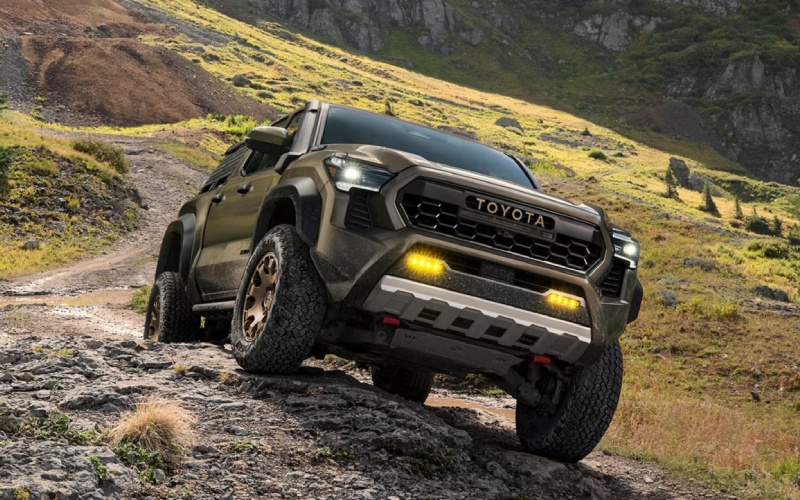
Venice Toyota – Which midsize truck has more trail-ready tech for Punta Gorda, FL drivers: 2026 Toyota Tacoma or 2026 Nissan Frontier?
Looking at midsize trucks through the lens of Punta Gorda, FL—where shell-packed access roads meet brackish boat ramps and afternoon winds can sweep across bridges—the question many shoppers ask is simple: which truck gives me smarter trail tech and towing confidence without overcomplicating my day? Below, we break down how the 2026 Toyota Tacoma and 2026 Nissan Frontier compare where it matters most around Charlotte Harbor: secure traction on loose surfaces, camera systems that reduce guesswork, and tools that help you guide a trailer smoothly and safely.
What matters for trail and towing confidence around Punta Gorda
On the Gulf Coast, traction and sightlines count. Rutted sand, shallow washouts, oyster shell, and quick tides near boat launches create situations where maintaining momentum, placing wheels precisely, and backing predictably are top priorities. That means the right suspension geometry, helpful low-speed features, and crisp camera views can be worth more than raw horsepower alone. Both Tacoma and Frontier bring legit hardware; the difference is how comprehensively each system helps you through those moments when attention to detail matters most.
The 2026 Nissan Frontier PRO-4X® adds Bilstein® shocks, skid plates, an electronic locking rear differential, and available Intelligent Around View® Monitor with Off-Road Mode. It’s an honest, trail-ready setup—great for rocky cuts and graded forest roads. The 2026 Toyota Tacoma, however, layers on additional tools that directly address Gulf Coast scenarios. The available Stabilizer Disconnect Mechanism (SDM) boosts articulation at the press of a button for uneven ramps and moguls. The available Multi-Terrain Monitor offers underbody-capable views to help you read ruts, roots, and hidden edges. And available Trailer Backup Guide with Straight Path Assist overlays guidance that can help you line up a boat or utility trailer cleanly on narrow, crowded approaches.
Tacoma’s under-the-surface advantages
Tacoma’s chassis and powertrain menu go beyond a single formula. Many Double Cab models use a multi-link rear suspension that keeps the rear tires planted over bumps and washboard, improving control when the surface gets choppy. The TRD Pro’s 2.5-inch FOX® Internal Bypass QS3® shocks and the Trailhunter’s Old Man Emu® 2.5-inch forged monotube position-sensitive shocks are purpose-tuned for the mix of speed, load, and terrain common on Florida trails. And the available i-FORCE MAX hybrid powertrain delivers up to 326 horsepower and 465 lb.-ft. of torque, giving you a decisive low-end shove that makes sand starts and ramp climbs feel remarkably calm.
Inside, the Tacoma’s available 14-inch Audio Multimedia display and 12.3-inch digital gauge cluster put towing, camera, and off-road information in a clean, quick-to-read format. You can toggle views on the Multi-Terrain Monitor to check clearances ahead, along the sides, and even the ground below—helpful when washouts or oyster shell piles are lurking just out of sight. Wireless Apple CarPlay® compatibility on select trims keeps the dash uncluttered, and the available 2400W power supply can run air pumps, power tools, or campsite gear without a separate generator. Pair all of that with Toyota Safety Sense™ 3.0, which adds Lane Tracing Assist and other features that take the edge off cross-breeze commutes across the Peace River, and you get a package tuned for daily calm as much as weekend capability.
Frontier’s strengths—and where it trails
Frontier’s fully boxed frame, standard 3.8L V6 at 310 horsepower, and 9-speed automatic are proven and stout. PRO-4X® hardware—Bilstein® shocks, E-locker, skid plates—delivers traction and impact protection you can trust. Safety Shield® 360 and the available Intelligent Around View® Monitor with Off-Road Mode are smart additions for trail days and parking-lot awareness. Still, Frontier lacks the breadth of Tacoma’s toolset: no hybrid option for added torque, no manual transmission choice for purists, no SDM for fast articulation boosts, and no factory Trailer Backup Guide with Straight Path Assist to help on tight, angled launches. Its tech improves your day—just not as comprehensively as Toyota’s integrated systems do on low-speed, low-visibility tasks that define our coastal routine.
How to pick the right setup for Charlotte Harbor days
Start by mapping your most frequent use cases. If your weekends include backing a boat on a slim, angled ramp, Tacoma’s Trailer Backup Guide with Straight Path Assist is a genuine difference-maker. If you frequently transition from patched city streets to sandy access roads, Tacoma’s multi-link rear suspension and SDM help maintain traction and composure. If you want a simple, rugged setup that’s reliably capable on graded trails, a Frontier PRO-4X® remains a solid choice. But if you want wider capability with clearer visibility, smarter guidance, and torque that arrives right when you need it, Tacoma’s stacked features translate directly into confidence.
- Low-speed visibility: Tacoma’s Multi-Terrain Monitor provides underbody-capable camera views; Frontier’s Intelligent Around View® Monitor helps but does not offer the same ground-focused perspective.
- Articulation and traction: Tacoma’s Stabilizer Disconnect Mechanism boosts wheel travel on uneven surfaces; Frontier relies on traditional hardware without a factory disconnect feature.
- Towing guidance: Tacoma’s Trailer Backup Guide with Straight Path Assist overlays guidance to help keep trailers aligned; Frontier offers helpful camera views but not guided trailer backup assistance.
Frequently Asked Questions:
Does the Tacoma’s available hybrid help on sandy ramps?
Yes. The i-FORCE MAX hybrid’s instant torque helps you ease a trailer up or down sandy or shell-littered approaches with smooth, controlled inputs—reducing wheelspin and strain on the drivetrain.
Is Frontier’s PRO-4X® still a good choice for Florida trails?
Absolutely. Bilstein® shocks, skid plates, and the locking rear differential equip the Frontier for rocky or graded paths. It’s durable and straightforward—just not as feature-rich for camera-guided, low-speed work.
Which truck offers better guidance when backing a boat?
Tacoma. Its available Trailer Backup Guide with Straight Path Assist provides on-screen guidance to keep your trailer tracking cleanly, particularly helpful on angled or busy launches around Punta Gorda.
Bottom line for Punta Gorda shoppers
If your daily routes and weekends revolve around mixed surfaces, tight marina spaces, and frequent towing, the 2026 Toyota Tacoma brings a deeper bench of tools that directly address those tasks. The 2026 Nissan Frontier is dependable and trail-capable, but Tacoma’s advanced camera systems, SDM articulation, and towing guidance create a smoother, more confident experience around Charlotte Harbor.
Ready to compare both in person? Visit Venice Toyota, serving North Port, Port Charlotte, and Punta Gorda. Our product specialists will help you explore off-road and towing tech side by side so you can build the truck that fits your life on Florida’s Gulf Coast.
One last note: whichever route you choose, keep up with washdowns and underbody rinses after saltwater exposure to protect components—good practice for any Gulf Coast truck.
When you’re set to test-drive, bring your questions about boat sizes, hitch equipment, and camera views. We’ll walk you through the features that matter for your specific ramp, dock, or driveway layout—and make sure your truck is ready for the season ahead.
Request more 2026 Toyota Tacoma information
Connect with us


- 2024 4Runner
- 2024 Corolla
- 2024 Crown
- 2024 Grand Highlander
- 2024 Highlander Hybrid
- 2024 RAV4
- 2024 Sequoia
- 2024 Tacoma
- 2024 Tacoma Hybrid
- 2024 Toyota Lineup
- 2024 Tundra
- Toyota Camry
- Toyota Corolla
- Toyota Dealer
- Toyota Land Cruiser
- Toyota RAV4
- Toyota Service
- Toyota Tacoma
- Toyota Tundra
- Uncategorized
- Venice Toyota Dealer