


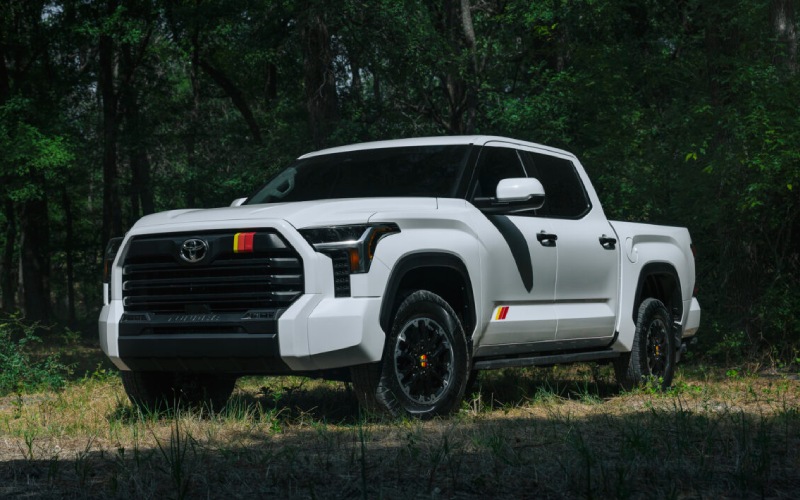
Venice Toyota – Will the 2026 Toyota Tundra’s composite bed hold up to coastal life around Port Charlotte, FL?
Shoppers in and around Port Charlotte ask a smart, real-world question before committing to a full-size truck: Will the 2026 Toyota Tundra’s bed actually stand up to life on the Gulf Coast, with salt air, sun, and frequent trips to boat ramps and job sites? At Venice Toyota, we see those conditions every day, and we can confirm the Tundra’s aluminum-reinforced composite bed was built to thrive here—while also making daily use simpler and more confidence-inspiring.
What the Tundra bed is made of—and why that matters on the Gulf Coast
Tundra features a standard aluminum-reinforced composite bed engineered to act like a shield against dents, impacts, dings, and rust. Unlike traditional steel beds, the composite bed does not rust, and the integrated reinforcements help it stay structurally solid when you’re loading gear, coolers, pressure-treated lumber, or outboard parts. For coastal owners in Port Charlotte, Punta Gorda, and Harbor Heights, corrosion resistance is a major long-term advantage.
Just as important, the bed is offered in three lengths—5.5-ft., 6.5-ft., and 8.1-ft.—so you can match the cargo box to your daily routine without overbuying. Pair that utility with Tundra’s Multi-Link Rear Suspension for composed ride quality and towing stability, and you have a truck that is both tough and easy to live with on US-41, Veterans Blvd., or Charlotte Harbor boat ramps.
Real-world durability at boat ramps, jobs, and weekend getaways
Between salt-laden air, UV exposure, and frequent loading and unloading, coastal trucks take a beating. The Tundra’s composite bed helps you stay ahead of that reality. Whether you’re backing down a ramp on Edgewater Drive with a skiff, hauling mulch to Midway Boulevard jobs, or packing camping gear for Myakka River adventures, the bed’s materials and design reduce the typical wear and tear you would expect over years of ownership.
- Corrosion resistance: Composite panels are not susceptible to rust, a key benefit for trucks frequently near saltwater or brackish environments in and around Charlotte Harbor.
- Dent defense: The bed is engineered to help resist common impacts from tools, tackle boxes, and building materials that would typically leave marks in conventional beds.
- Low-maintenance surface: Routine rinsing is often all it takes to keep the bed looking clean after sandy or salty use.
- Confidence in daily use: From grocery runs to marina days, the bed is built to stay presentable without babying it.
Underneath, Tundra backs that bed strength with serious power. Choose the i-FORCE twin-turbo V6 for 389 HP/479 Lb.-Ft. of Torque or step up to the i-FORCE MAX hybrid for 437 HP/583 Lb.-Ft. of Torque. And when properly equipped, Tundra offers a Max Towing of 12,000 Lbs. and a Max Payload of 1850 Lbs., giving you headroom for both work and play. That capability matters when your week is a mix of job site supply runs and weekend runs across the Peace River.
Which bed length fits Port Charlotte life best
Picking the right bed length is about more than capacity—it is about how and where you drive. Many Port Charlotte neighborhoods have tighter cul-de-sacs and HOA considerations, while US-41 and I-75 demand an easy-driving truck Monday through Friday. Here is a simple way to think about it:
- 5.5-ft. bed: Easiest to maneuver and park, great for daily drivers who still want a rugged bed for coolers, tools, and weekend gear.
- 6.5-ft. bed: A balanced sweet spot for homeowners, anglers, and small-business owners who regularly load longer items but still want control in tighter lots near Kings Hwy. or Murdock Circle.
- 8.1-ft. bed: Maximum box length for contractors and DIYers moving sheet goods, landscaping supplies, and longer cargo without leaving the tailgate down.
If you are torn between maneuverability and capacity, our team can help you measure typical cargo, consider where you park, and test-drive different configurations so you land on the right fit the first time.
Bed care tips that pay off in our coastal climate
Even with a rust-resistant composite bed, a few simple habits go a long way toward keeping your truck looking sharp and performing at its best along the Gulf Coast. None of these steps is time-consuming—most take minutes after a run to the marina or garden center.
- Fresh-water rinse: After exposure to salt spray or sandy gear, rinse the bed and tailgate thoroughly to keep surfaces and hardware clean.
- Mind your load distribution: Even sturdy composite beds benefit from evenly spread loads; use pallets or boards under concentrated point loads to protect surfaces.
- Secure cargo correctly: Tight, even tie-downs reduce shifting that can scuff any bed surface during stop-and-go trips on US-41.
- Keep it clean: A quick sweep before rinsing removes gritty debris that could drag and mar surfaces if pushed around by water.
Follow those quick tips and the Tundra’s composite bed will continue to look and function the way you expect—day after day, season after season.
Helpful tech when your cargo routine involves ramps and tight lots
Getting in and out of tight spaces around Port Charlotte Town Center or local marinas gets easier with Tundra’s available Panoramic View Monitor, which stitches images from cameras on the front, sides, and rear into a 360-degree view. The available 14-In. Multimedia Touchscreen and available 12.3-In. Digital Gauge Cluster puts key info at a glance, including towing functions and camera views.
If you also tow, the available Trailer Backup Guide With Straight Path Assist can help you keep your trailer in a straight line while backing—handy when you are lining up at a crowded ramp or trying to position a trailer beside a home where space is tight. Pair that with the available Integrated Trailer Brake Controller (ITBC) on select grades, and it is clear the truck is designed for people who actually use their trucks, not just talk about them.
As for on-road confidence, Toyota Safety Sense™ 2.5 is available to support everyday driving with a suite of active safety and driver-assist features. And if you want a model that leans into trail duty between Placida and Boca Grande, Tundra’s TRD family—up to TRD Pro with 18-in. BBS® forged-aluminum wheels, Falken® WILDPEAK All-Terrain tires, and FOX® shocks—keep the fun going when the pavement ends.
Bottom line: the Tundra’s bed is as practical as it is durable, and the rest of the truck is engineered to make hard work feel easy, whether your routine is school drop-offs, job sites, the marina, or all three.
See the bed in person—then load it up on a test drive
The best way to decide is to step into the bed yourself, check the lip heights, and see how your coolers, tackle bins, or toolboxes fit. Visit us at Venice Toyota—just a quick drive from Port Charlotte up US-41—and we will walk you through bed lengths, cab choices, and available capability packages. Bring your gear if you like; we will help you make sure your next truck fits your life from day one.
Frequently Asked Questions:
Does the 2026 Tundra’s composite bed rust in coastal climates like Port Charlotte?
No. The Tundra’s aluminum-reinforced composite bed is designed to act as a shield against dents, impacts, dings, and rust. Composite material does not rust, and the aluminum reinforcement resists corrosion. We still recommend a quick fresh-water rinse after salt exposure to keep surfaces and hardware clean.
Which bed length makes the most sense for everyday driving and marina trips?
The 5.5-ft. bed is easiest to maneuver and park for daily use. The 6.5-ft. bed balances space and control for owners who haul longer items regularly. The 8.1-ft. bed is best for maximum capacity, like full-length lumber or landscaping materials. We can help you test-fit your typical cargo and compare turning ease around your neighborhood.
How much weight can I safely carry in the 2026 Tundra’s bed?
When properly equipped, the 2026 Tundra offers a Max Payload of 1850 Lbs. Always verify the exact payload for your configuration on the driver’s door jamb label, and distribute weight evenly in the bed to protect surfaces and maintain stability.
Can I tow a trailer and still carry gear in the bed?
Yes—within your truck’s stated ratings. Stay within Gross Vehicle Weight Rating (GVWR), axle ratings, and tongue weight guidelines. Tundra’s available Trailer Backup Guide with Straight Path Assist and available Integrated Trailer Brake Controller (ITBC) help make trailering feel more controlled when you are juggling both bed cargo and a trailer.
What Tundra features make hauling and parking easier around tight lots?
The available Panoramic View Monitor provides a 360-degree view around the truck to help with tight maneuvering, and the available 14-In. Multimedia Touchscreen and available 12.3-In. Digital Gauge Cluster puts towing and camera information close at hand for quick reference.
If you are ready to see how the 2026 Toyota Tundra’s bed stands up to real coastal life, stop by Venice Toyota. Our team will help you choose the right bed length and configuration for Port Charlotte driving, answer your questions in depth, and set you up for a thorough test drive.
Request more 2026 Toyota Tundra information
Connect with us


