
Blog / Toyota Tundra

Boat Days and Work Weeks - Choosing Your 2026 Toyota Tundra Setup around North Port, FL

Boat Days and Work Weeks - Choosing Your 2026 Toyota Tundra Setup around North Port, FL

Venice Toyota - Boat Days and Work Weeks - Choosing Your 2026 Toyota Tundra Setup around North Port, FL

The right full-size truck should feel tailored to your life—able to haul gear for the job, tow a boat with confidence, and stay comfortable mile after mile on US-41 or I-75. If you’re weighing configurations for a 2026 Toyota Tundra, let’s zoom in on two high-impact choices: bed length and powertrain. From the coast to the back roads, these decisions define how easily your Tundra fits a boat launch, a driveway, or a workday rhythm around North Port, FL.

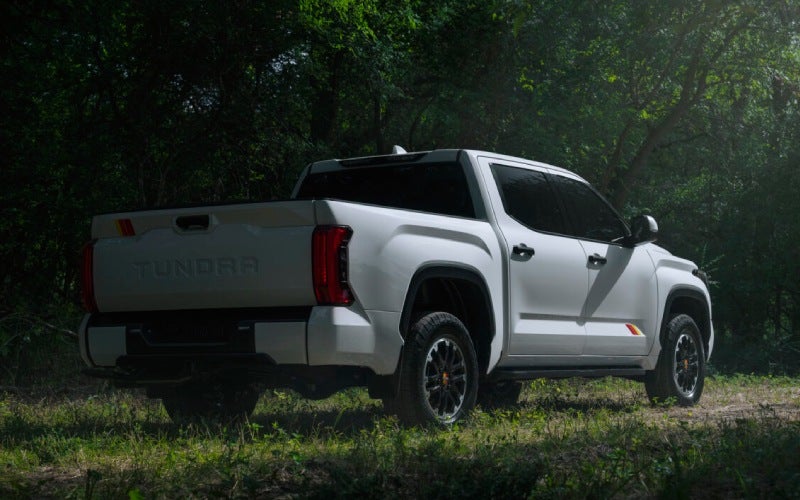
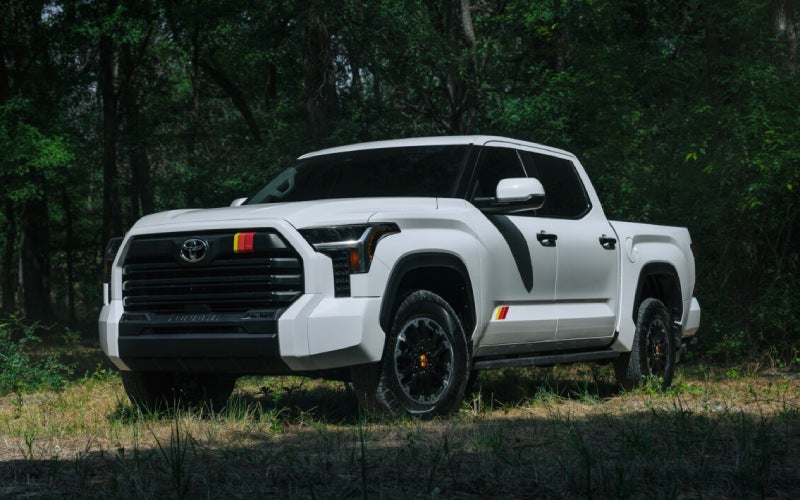
First, the bed. Tundra’s aluminum-reinforced composite bed is ultra-durable and available in 5.5-ft., 6.5-ft., and 8.1-ft. lengths. That composite build resists dents, impacts, dings, and rust, which matters when you’re loading salty gear or tools. The 5.5-ft. bed keeps overall length manageable for tight parking, while the 6.5-ft. hits a sweet spot between cargo capacity and maneuverability. The 8.1-ft. bed maximizes floor space for lumber runs or longer gear—great if your weekdays involve deliveries or jobsite materials. Because the bed is composite, you’re getting resilience without lugging extra steel weight around town.

Power that matches what you tow

If a boat is in the picture, power determines how comfortably you get from storage to the water. Tundra’s i-FORCE twin-turbo V6 produces 389 hp and 479 lb.-ft. of torque. It’s strong, quick to respond, and well-suited for most single-axle trailers and family-sized center consoles. Step up to the i-FORCE MAX twin-turbo V6 hybrid if you want even more low-end grunt—437 hp and 583 lb.-ft. of torque—plus smooth, confident acceleration when pulling a heavier rig. With proper configuration, Tundra can tow up to 12,000 lbs., giving you plenty of room to grow into a bigger boat or add more gear.

Camera tech brings a new level of calm to hitching and backing. The available Panoramic View Monitor (PVM) stitches together multiple camera angles to build a 360-degree composite view. It helps in a crowded marina lot as much as it does in a narrow driveway. Trailer Backup Guide With Straight Path Assist uses sensors and cameras to help keep your trailer in line as you reverse—especially welcome when a side breeze or tight dock lane tries to push you off course. Pair that with an Integrated Trailer Brake Controller on select grades and selectable TOW/HAUL modes, and you have a towing partner that supports the driver at every turn.

Which grade aligns with your lifestyle?

Your daily routine can help narrow down trims. If you prefer tech-forward comfort, Limited or Platinum gives you amenities like an available 14-In. Toyota Audio Multimedia touchscreen and available leather-trimmed seats that make long trips up the coast more relaxing. The 1794 Edition leans into rich Saddle Tan details and American walnut wood-grain accents—a handsome balance of grit and grace. If off-road time is your recharge, explore the TRD Family. TRD Off-Road Package adds trail-friendly upgrades, while TRD Pro dials it up with TRD Pro off-road suspension with FOX® shocks and a 1.1-in. front lift, 18-in. BBS® forged-aluminum wheels, and Falken® WILDPEAK All-Terrain tires.

Inside, the available 12.3-In. Digital Gauge Cluster puts towing functions, off-road pages, safety prompts, and audio controls where you’ll actually see and use them. The interface is simple and confidence-inspiring, especially when you’re toggling between screens to check a trailer connection or line up to a ramp. If you value a quieter, more premium cabin, look for the available JBL® Premium Audio with 12 speakers and an available power tilt/slide panoramic roof with power sunshade—nice extras for highway cruises to family getaways.

Everyday drivability around town

Even when you’re not towing, the Tundra’s multi-link rear suspension with coil springs keeps things composed over patched pavement and expansion joints. It also contributes to towing stability when you do hook up the trailer. That poise is noticeable as you roll through traffic lights, climb the bridge, or navigate retail centers on Tamiami Trail. If you’re switching between school runs and supply runs, the Tundra’s blend of maneuverability and visibility hits the mark.

Safety remains a highlight with Toyota Safety Sense™ 2.5 standard. Features like a Pre-Collision System with Pedestrian Detection, Lane Departure Alert with Steering Assist, Lane Tracing Assist, Road Sign Assist, and Dynamic Radar Cruise Control support the driver during busy commutes and weekend road trips. Add the available Panoramic View Monitor (PVM) and you’ll take the stress out of tight-angle parking and trailer lineups.

Helpful decision checklist

To zero in on your ideal setup, use this quick guide when you test-drive and build your truck.

  • Primary use: Will the truck see more boat-duty weekends or workday hauling?
  • Typical trailer weight: Single-axle family boat or heavier multi-axle rig?
  • Parking constraints: Do you regularly fit into tight driveways or garage spots?
  • Bed needs: Do your weekdays demand the extra floor space of an 8.1-ft. bed?
  • Ride feel: Do you want maximum off-road travel or a comfort-first setup?
  • Cabin priorities: Is premium audio, a panoramic roof, or leather seating on your must-have list?
  • Tech confidence: Will Trailer Backup Guide With Straight Path Assist and PVM be used often?

For many North Port, FL shoppers, a 6.5-ft. bed paired with i-FORCE MAX is a sweet spot: manageable length for daily errands, robust torque for watercraft on weekends, and a smooth, composed feel around town. If you prioritize easy parking, try the 5.5-ft. bed with the gas i-FORCE—still strong, plenty capable for a family boat, and simple to maneuver in crowded lots.

When you’re ready to spec yours, Venice Toyota is your local hub for hands-on guidance. We can walk you through the camera and towing systems, show you how the Trailer Backup Guide With Straight Path Assist behaves in real scenarios, and help test-fit bed lengths to your gear. Our product specialists can also demonstrate the 14-In. Toyota Audio Multimedia touchscreen and 12.3-In. Digital Gauge Cluster so you leave confident with the tech you’ll use every day.

Frequently Asked Questions:

How much can the 2026 Toyota Tundra tow?

When properly equipped, Tundra offers a max towing capacity of up to 12,000 lbs. Your exact rating depends on configuration, so we’ll help you build a setup that fits your trailer and gear.

Is the composite bed strong enough for work use near the coast?

Yes. The aluminum-reinforced composite bed is designed to resist dents, impacts, dings, and rust. It’s especially well-suited for coastal lifestyles where salt and humidity are everyday factors.

Which powertrain should I pick for towing?

The i-FORCE twin-turbo V6 is excellent for most boats and everyday towing. If you want more low-end torque and smoother acceleration under load, the i-FORCE MAX hybrid is the right upgrade.

What tech helps with hitching and backing a trailer?

Available Panoramic View Monitor (PVM) provides multiple camera angles, and Trailer Backup Guide With Straight Path Assist uses sensors and cameras to help keep your trailer aligned as you reverse.

Are there trims focused on off-road driving?

Yes. The TRD Family offers the available TRD Off-Road Package and the TRD Pro trim, which adds TRD Pro off-road suspension with FOX® shocks, a 1.1-in. front lift, 18-in. BBS® forged-aluminum wheels, and Falken® WILDPEAK All-Terrain tires.

Count on our showroom team for tailored recommendations, serving North Port, Port Charlotte, and Punta Gorda with expert guidance and real-world demos that align with how you tow, haul, and explore.
Request more 2026 Toyota Tundra information

Posted in:

Related Posts

Which truck has the smarter standard safety tech for everyday driving around Englewood, FL – Toyota Tundra or Ram 1500?

Which truck has the smarter standard safety tech for everyday driving around Englewood, FL – Toyota Tundra or Ram 1500?

Venice Toyota - Which truck has the smarter standard safety tech for everyday driving around Englewood, FL – Toyota Tundra or Ram 1500? Safety is often the tiebreaker when comparing modern full-size pickups. If you’re weighing Tundra against Ram for runs to the beach, jobsite traffic, and evening errands, the standard advanced driver assistance on Toyota’s side stands out quickly. Let’s unpack how each truck approaches safety, and what that means for daily confidence on U.S. 41 and I-75, neighborhood streets, and crowded marina lots around Englewood, FL. Toyota Safety Sense™ 2.5 comes standard on every 2026 Tundra. That includes a sophisticated Pre-Collision System with Pedestrian Detection, Lane Departure Alert with Steering Assist, and Dynamic Radar Cruise Control. The goal is to support you when visibility or attention is challenged—rain-slicked turns, stop-and-go congestion, or a child chasing a soccer ball between parked cars. Ram equips the 2026 1500 with many comparable features, but the most advanced systems tend to be available or tied to specific trims or packages. The difference in standardization can simplify your buying decision: every Tundra gets a robust safety baseline from day one. Core safety feature comparison that matters on busy Gulf Coast roads Both trucks can be fitted with 360-degree camera systems and parking aids, and both offer blind-spot monitoring features that extend coverage to your trailer. Where Tundra gains practical day-to-day traction is in how integrated those systems feel with the truck’s towing and visibility tools. The available Panoramic View Monitor supplies multiple angles when you’re threading through tight lots or aligning with a trailer coupler. Toyota’s Trailer Backup Guide with Straight Path Assist helps you reverse predictably, even if the marina ramp is busy and space is tight. These features reduce stress, shorten setup time, and couple well with the truck’s standard driver-assist suite. Ram counters with a strong menu of available technologies and has made big strides in display clarity and layout. But for drivers who don’t want to hunt for the right safety package or jump trims to secure core features, the Tundra’s standard TSS™ 2.5 suite wins on simplicity and consistency. That matters when you’re switching drivers in the household or adding a second truck to a small business fleet and need reliable, uniform safety support across vehicles. How this plays out when you tow or haul Both trucks can be set up with integrated trailer brake controllers and specialized towing cameras. In practice, the Tundra’s calibration of these aids with its powertrains—especially the i-FORCE MAX hybrid—keeps the experience cohesive. Immediate torque helps you merge with authority, while Dynamic Radar Cruise Control can maintain distance without lurching or over-braking. The camera views and trailer path support reduce second-guessing at the ramp or when backing into a side yard. Ram’s technology is capable, but the Tundra’s standard safety suite plus towing aids in one ecosystem tend to feel more intuitive for mixed-use days. When to pick options beyond the standard suite Standard TSS™ 2.5 covers a lot of ground, but if your daily driving includes frequent multi-lane highway stints or night commutes on unlit roads, consider available upgrades. The digital rearview mirror can help maintain a clear view with a loaded bed; enhanced cameras provide more angles for tight parking; and additional alerts can sharpen awareness in complex traffic. Ram offers parallel upgrades; the key is ensuring the features you want are actually included on the trim you’re considering. This is where an informed walkaround and test drive matter. Baseline you can count on: Tundra includes Toyota Safety Sense™ 2.5 on every model, cutting guesswork. Visibility that adapts: Available Panoramic View Monitor and a digital rearview mirror expand confidence in tight spaces. Towing integration: Trailer Backup Guide with Straight Path Assist works hand in hand with camera and braking aids. Frequently Asked Questions: Do both trucks offer adaptive cruise control that works in traffic? Yes. Both can be equipped with adaptive cruise control. Tundra includes Dynamic Radar Cruise Control as part of standard Toyota Safety Sense™ 2.5, while Ram offers a comparable system on select trims or packages. Which truck makes advanced safety easier to get without adding packages? Tundra. With TSS™ 2.5 standard on every model, you don’t have to step up to a specific trim to secure core driver-assist features. Ram offers robust technology, but availability varies by configuration. Can I get a 360-degree camera and trailer-specific views on both? Yes. Both trucks offer 360-degree camera systems and trailer-focused views. Tundra’s available Panoramic View Monitor and Trailer Backup Guide with Straight Path Assist are tightly integrated, making them especially helpful during everyday maneuvers. What’s the benefit of a digital rearview mirror in a pickup? When the bed is full or you’re towing, a digital rearview mirror can display a rear camera feed, preserving a clear line of sight that wouldn’t be possible with a standard mirror. If you’re seeking a full-size pickup with advanced safety that’s straightforward to access—and an overall package that brings strong towing confidence, visibility, and durability—the Tundra builds a compelling case. Our team at Venice Toyota can walk you through the safety suite, set up a test drive, and compare trims and camera options side by side so you can choose what matches your daily routine best. We’re proudly serving Port Charlotte, Punta Gorda, and Englewood with knowledgeable guidance and flexible test-drive options that fit your schedule. Request more 2026 Toyota Tundra information

Why the 2026 Toyota Tundra’s i-FORCE MAX and Camera Tech Fit Life Around Englewood, FL

Why the 2026 Toyota Tundra’s i-FORCE MAX and Camera Tech Fit Life Around Englewood, FL

Venice Toyota - Why the 2026 Toyota Tundra’s i-FORCE MAX and Camera Tech Fit Life Around Englewood, FL The 2026 Toyota Tundra makes daily driving and weekend towing around Englewood, FL feel easier, smarter, and more comfortable. If your routine includes crossing the Tom Adams Bridge toward Manasota Key, hauling paddleboards down to Stump Pass, or trailering a center console from Lemon Bay Park, the Tundra’s combination of torque-rich powertrains and thoughtful camera coverage can reduce stress and save time. Let’s dig into how the i-FORCE MAX hybrid powertrain, Trailer Backup Guide with Straight Path Assist, and available Panoramic View Monitor (PVM) work together for the Gulf-side lifestyle. Hybrid Torque That Works As Hard As You Do At the heart of the i-FORCE MAX is a twin-turbocharged V6 paired with an electric motor, producing 437 horsepower and an immense 583 lb.-ft. of torque. Translation for Englewood drivers: smoother, more confident acceleration from a stop, even when you’re pulling a loaded trailer up Gulf Boulevard’s changing traffic flow or merging onto S McCall Road with gear in the bed. That tidal push of torque at low rpm is exactly what you feel when you need it most—lining up at an angled ramp, slipping into a tight gap, or clearing a red-to-green light with a heavy boat in tow. Tundra backs up this power with a multi-link rear suspension and coil springs that do a great job controlling fore-aft motion and keeping the trailer settled. Compared with trucks designed around traditional leaf springs, the Tundra feels more planted on expansion joints and patched asphalt, which you’ll notice along Dearborn Street and on the short, sometimes choppy stretches near Ainger Creek Park. Camera Coverage That Earns Its Keep Backing a trailer on busy weekends around Manasota Key takes awareness and a cool head. The available Panoramic View Monitor (PVM) uses cameras at the front, sides, and rear to build a 360-degree view—perfect for threading past parked vehicles or pilings without second-guessing your mirror angle. Shift to reverse, and the Tundra layers in guidelines that help you visualize your path as you pivot between pedestrians, cyclists, and slow-rolling traffic near the water. Trailer Backup Guide with Straight Path Assist is the ace up your sleeve when you need it most. Using sensors and cameras, the Tundra helps you maintain a straight trailer line while backing, correcting the guesswork that causes jackknifing. Whether you’re easing down the ramp at Indian Mound Park or nudging into a side-yard pad in Rotonda West, this system reduces the steering “trial and error” so you can place the trailer with less drama. Bed Options and Materials That Make Sense for Coastal Living Englewood’s salt air can be tough on trucks that spend time near the water. Tundra’s aluminum-reinforced composite bed helps guard against dents, dings, and rust—an everyday advantage when you’re loading coolers, hitch gear, or wet boards. Choose from three available lengths (5.5-, 6.5-, and 8.1-ft.) to match your trailering and parking needs. If you often navigate tighter side streets or angled driveways off Boundary Boulevard, the shorter bed in a CrewMax configuration may give you the best blend of interior space and maneuverability. Tech That Makes Long Days Feel Shorter The Tundra’s available 14-in. Toyota Audio Multimedia touchscreen and 12.3-in. digital gauge cluster keep essential info in view. Toggle towing functions, check trailer connection status, or zoom out your navigation without juggling multiple apps. Wireless Apple CarPlay and Android Auto make quick work of playlists and calls between errands on Pine Street and afternoon runs along Beach Road, while available JBL® Premium Audio turns the cabin into a relaxed, road-ready retreat. What About Safety and Driver Assistance? Standard Toyota Safety Sense™ 2.5 brings a suite of driver assistance features you’ll appreciate in coastal traffic and on US-41. Full-Speed Range Dynamic Radar Cruise Control takes steadying the throttle off your plate, and Lane Tracing Assist provides gentle, confidence-building support during longer highway stretches. Blind Spot Monitor with available Trailer Merge Assist adds extra eyes where you need them most—especially handy when the trailer blocks your view while changing lanes near the roundabout by Dearborn and River Road. Daily Driving Benefits That Add Up For many Englewood drivers, the Tundra’s biggest strengths show up in the small moments: the quick, decisive merge onto Englewood Road with a weekend load; the way PVM clears up blind corners before a tight park; the smoothness of the rear suspension on broken pavement after a storm. It’s a full-size truck built to pull and haul, but it’s also designed to reduce friction in your day so you arrive with more energy for the water or the work ahead. Low-RPM Torque: i-FORCE MAX hybrid helps with clean, confident launches Trailer Tools: Backup Guide with Straight Path Assist reduces guesswork 360 Awareness: Available PVM helps in tight marinas and beach lots Ride Quality: Coil-spring rear suspension smooths daily routes Durable Bed: Composite construction resists dents and rust If you’re choosing between full-size trucks for life around Lemon Bay and the Gulf, the 2026 Tundra’s hybrid torque, trailer-friendly tech, and corrosion-resistant bed materials line up especially well for Englewood’s blend of errands, towing, and beach-day hauling. It’s a smart fit for drivers who want power that feels responsive without feeling hectic, and technology that simplifies—not complicates—maneuvers around busy waterfronts. Frequently Asked Questions: How much can the 2026 Toyota Tundra tow when properly equipped? The 2026 Tundra is rated for up to 12,000 lbs. of max towing when properly equipped, which is plenty for many bay boats, dual-axle utility trailers, and weekend toys common around Englewood. Does the i-FORCE MAX hybrid help with towing at low speeds? Yes. The i-FORCE MAX hybrid’s electric motor adds instant torque, which helps smooth out low-speed maneuvers like launching at a ramp or aligning a trailer into a tight side yard or storage space. What’s the advantage of the Tundra’s composite bed on the coast? The aluminum-reinforced composite bed resists dents, dings, and rust—an everyday benefit for drivers who load wet gear or park where salt air and spray are common. Which camera or towing feature helps most at crowded ramps? Trailer Backup Guide with Straight Path Assist is a standout for backing down busy ramps, and the available Panoramic View Monitor provides helpful 360-degree awareness in tight spaces. If you’re mapping out your next full-size truck for Englewood life, the 2026 Toyota Tundra deserves a close look for its torque-rich performance, durable bed materials, and trailer-smart systems that play nicely with coastal living. At Venice Toyota, we’re proud of how well this truck fits the area’s driving demands—serving Punta Gorda, Englewood, and Placida with helpful guidance on grades, bed lengths, and towing tech to match your routine. Stop by to compare i-FORCE and i-FORCE MAX, try the camera views for yourself, and see how the Tundra’s blend of comfort, tech, and strength supports both weekday duties and weekend destinations across Englewood and beyond. Request more 2026 Toyota Tundra information

2026 Toyota Tundra or 2026 Ford F-150 – Which full-size truck rides smoother on everyday roads around Port Charlotte, FL?

2026 Toyota Tundra or 2026 Ford F-150 – Which full-size truck rides smoother on everyday roads around Port Charlotte, FL?

Venice Toyota - 2026 Toyota Tundra or 2026 Ford F-150 – Which full-size truck rides smoother on everyday roads around Port Charlotte, FL? If you’re comparing ride comfort between two heavy hitters, the 2026 Toyota Tundra and the 2026 Ford F-150 make it a close race—at least on paper. But real-world comfort isn’t just about seat padding. It comes down to rear suspension design, chassis tuning, and how the truck settles after bumps, speed humps, and broken pavement you meet around Tamiami Trail or on your daily hop to the marina near Port Charlotte, FL. The Tundra’s multi-link rear suspension with coil springs is a major differentiator. Coil-spring setups excel at controlling rebound and maintaining tire contact over uneven surfaces; that translates to less head toss and fewer secondary motions when you’re towing a small boat or cruising across patched asphalt. The F-150’s traditional leaf-spring rear remains durable under heavy payloads, but it tends to communicate more of the road directly into the cabin, especially when the bed is empty. If your daily drive includes frequent dips, bridge seams, and those worn intersections that seem to ripple after every summer storm repair, the Tundra’s composed response is easy to feel. How suspension design shapes daily comfort Beyond the spring type, geometry matters. The Tundra’s multi-link layout helps the axle track more precisely through its travel, which supports connected steering and predictable braking while towing. That control reduces the “see-saw” effect you sometimes feel with a trailer in low-speed traffic or when you’re jockeying into a tight driveway. Ride quality isn’t just about softness; it’s about control. Squat under the throttle, nose-diving under braking, and how quickly the truck calms down after a bump all affect fatigue and confidence. The Tundra’s tuning aims for a calm recovery rather than simply dialing in a cushy initial hit, and that’s exactly what you notice when crossing uneven railroad tracks on the way to a launch. Noise, vibration, and harshness Comfort also lives in the background sounds and subtle tremors you may not think about until they’re gone. The Tundra’s frame and body isolation work alongside the multi-link rear to reduce the high-frequency chatter that can make long drives feel longer. While the F-150 isolates well too, the combination of coil springs and Tundra’s chassis tuning tamps down small, rapid impacts that otherwise sneak into the cabin as chatter or seat shake. Even tire choice plays a role. Aggressive all-terrain patterns look great and help off-road, but they can introduce steady-state hum on concrete freeways. If your daily routes are mostly pavement with occasional sandy pull-outs, consider an all-season or mild A/T with a reinforced sidewall to complement Tundra’s suspension poise. What about towing comfort? Plenty of shoppers ask whether a smoother-riding truck can still feel stable with a trailer. The answer is yes—if the suspension geometry and damping are dialed in. The Tundra tows up to 12,000 lbs. when properly equipped, and its available Trailer Backup Guide with Straight Path Assist helps you line up confidently. The F-150 counters with strong maximums and its own trailer technologies, but Tundra’s composure when creeping on a slope or pivoting a trailer in close quarters stands out along the Gulf Coast, where space can be tight and visibility blocked by seawalls and landscaping. On highways, active driver assists reduce fatigue, but camera systems and clear towing menus reduce mistakes—equally important for confident travel with family and gear. Here again, the Tundra’s user-friendly 14-in. touchscreen and accessible towing pages keep you on top of the situation without digging through submenus. Quick checklist: how to test ride quality on your drive Use a route that includes slow-speed turns, a few small bumps, a bridge seam, and a quick stop from moderate speed. Bring a cooler or a couple of toolboxes to simulate light real-world cargo. Toggle tow/haul and drive modes to feel how each truck manages throttle tip-in and downshifts. Most importantly, note how quickly the truck settles after a disturbance—calm recovery is the hallmark of true comfort. Bumps and recovery: Does the truck settle quickly after speed humps and patched asphalt? Steering feel: Is the wheel steady through mid-corner dips and crowned lanes? Brake composure: Under a quick stop, does the rear stay planted without hop? Towing manners: Does low-speed trailer maneuvering feel progressive and predictable? Cabin calm: Are you hearing or feeling constant small vibrations on concrete? Technology can help, too. With the Tundra, the available Panoramic View Monitor eases curbside parking and ramp approaches, while clear, bright graphics on the 14-in. multimedia screen reduce distraction. The F-150’s 360-degree camera is strong as well, and Ford’s available BlueCruise can take the edge off long interstate stretches by handling lane-centering on compatible roads. Still, when you return to day-to-day speeds and imperfect pavement, the Tundra’s suspension character is what you’ll appreciate most. At Venice Toyota, serving North Port, Port Charlotte, and Punta Gorda, our product specialists encourage back-to-back test drives on familiar streets, with your own gear in the bed. That’s the only way to feel how the trucks respond to your routine routes and demands. Frequently Asked Questions: Does a coil-spring rear make the Tundra less capable for hauling? No. Tundra’s multi-link rear is engineered for stability and control under load, and the truck is rated to tow up to 12,000 lbs. when properly equipped. The design emphasizes composure without sacrificing capability. Will the composite bed really hold up to coastal use? Yes. Tundra’s aluminum-reinforced composite bed resists dents and corrosion that often come with wet gear, salt spray, and frequent loading—ideal for boat days and contractor duty along the Gulf Coast. Which truck is quieter on rough pavement? Both manage wind and powertrain noise well, but the Tundra’s multi-link rear and cabin isolation do an excellent job of reducing high-frequency chatter over patched concrete and expansion joints you encounter daily. If ride comfort is your top priority without giving up real towing strength, Tundra’s multi-link rear suspension and calm chassis response deliver a smoother, more settled drive. Add intuitive tech—like the available Panoramic View Monitor and large, easy-to-read displays—and you get a truck that takes the stress out of the daily grind while staying ready for work or weekends on the water. Visit Venice Toyota to schedule a drive and bring the gear you actually use—so you can feel the difference for yourself. Request more 2026 Toyota Tundra information